More than a graduation requirement, the Final Year Project is where knowledge becomes capability. Through real-world challenges, disciplined research, and hands-on innovation, FYPs prepare engineering students to think critically, build confidently, and step into industry as future-ready professionals.
Image
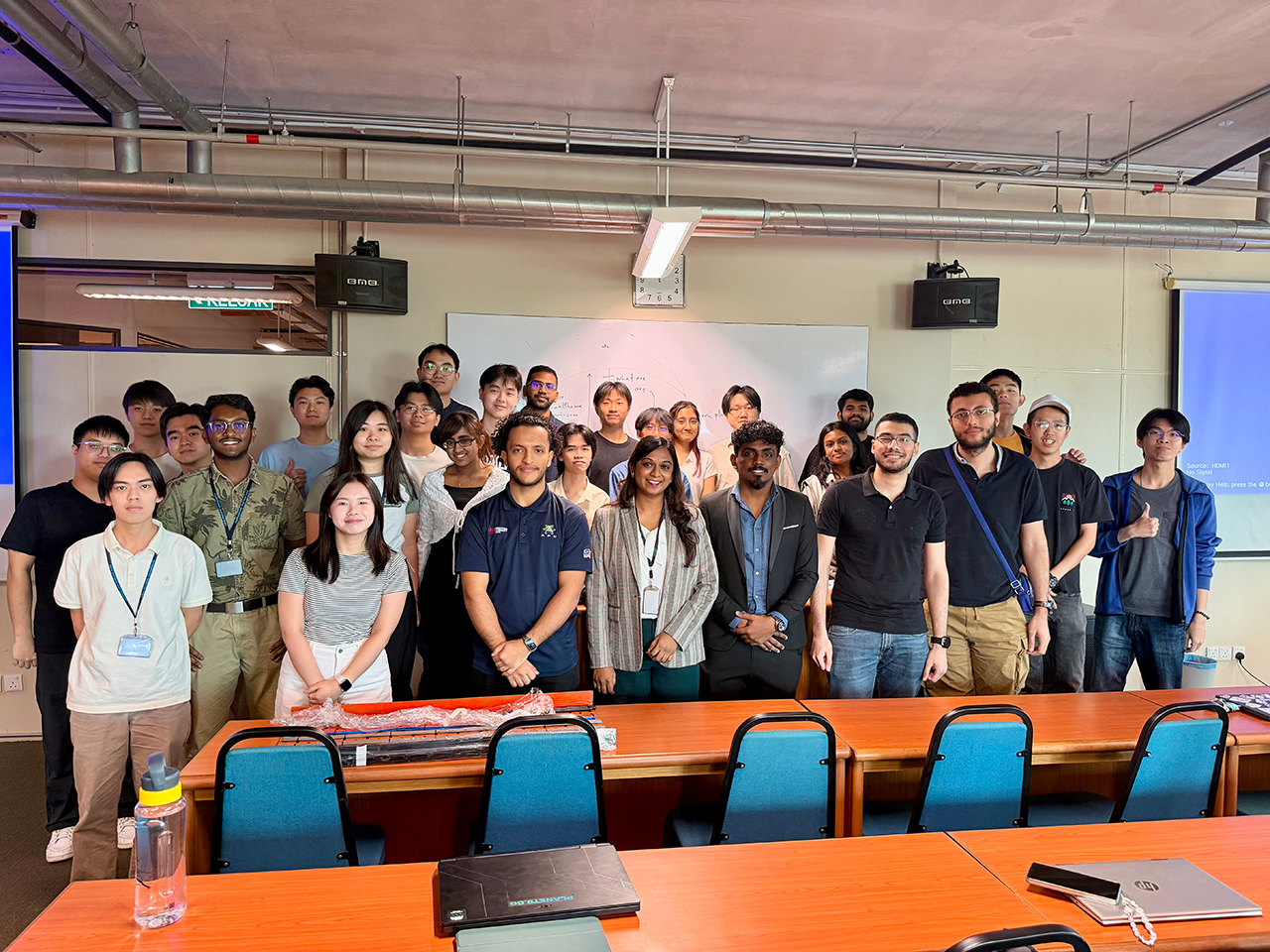
On 14 January 2026, the School of Engineering (SoE) hosted a Knowledge Transfer Seminar on campus titled From Award-Winning FYP to Real-World Autonomy. Designed to illuminate the journey from academic concept to practical innovation, the session showcased how Final Year Projects (FYPs) can evolve into impactful real-world systems—and, more importantly, how they prepare students for professional life beyond graduation.
The seminar underscored a simple yet powerful message: an FYP is not merely a graduation requirement. When approached with rigour, curiosity, and purpose, it becomes a launchpad for career readiness, research confidence, and real-world problem-solving.
Learning from an Award-Winning Journey
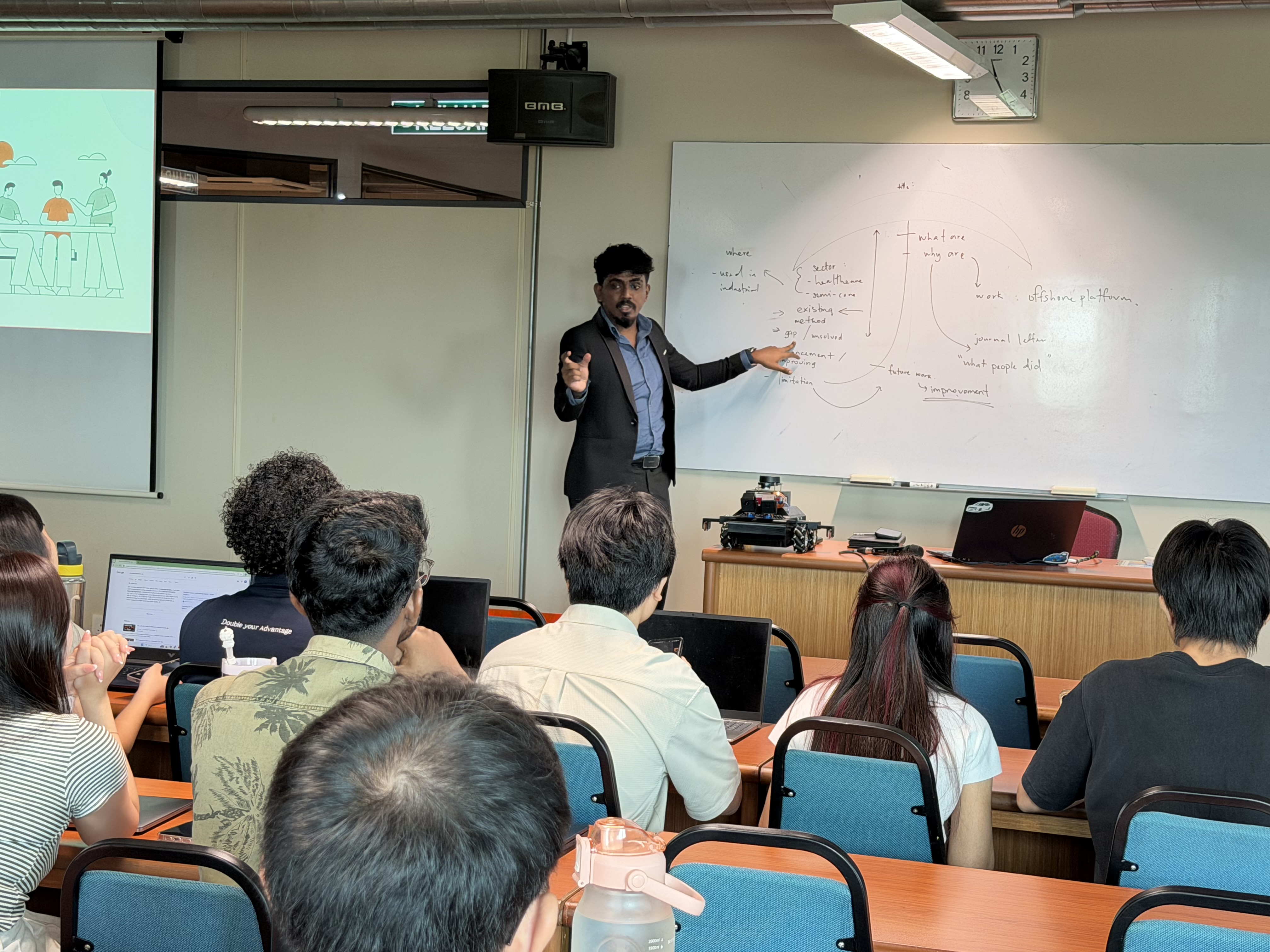
Delivered by Mr Kareshmen Maheswaran, a recent graduate of the Bachelor of Mechatronic Engineering with Honours, the session centred on his award-winning FYP—an autonomous drone implementation using OpenCV and LiDAR. Kareshmen’s project exemplified how classroom knowledge can be transformed into a functioning, intelligent system with tangible applications.
More than a technical showcase, his sharing offered students a rare glimpse into the realities of engineering practice: the uncertainties, the design trade-offs, and the perseverance required to move from concept to execution. By walking participants through his development process, Kareshmen bridged the gap between theory and application, demonstrating that innovation is born not only from ideas, but from disciplined experimentation and resilience.
An Engaged and Curious Community
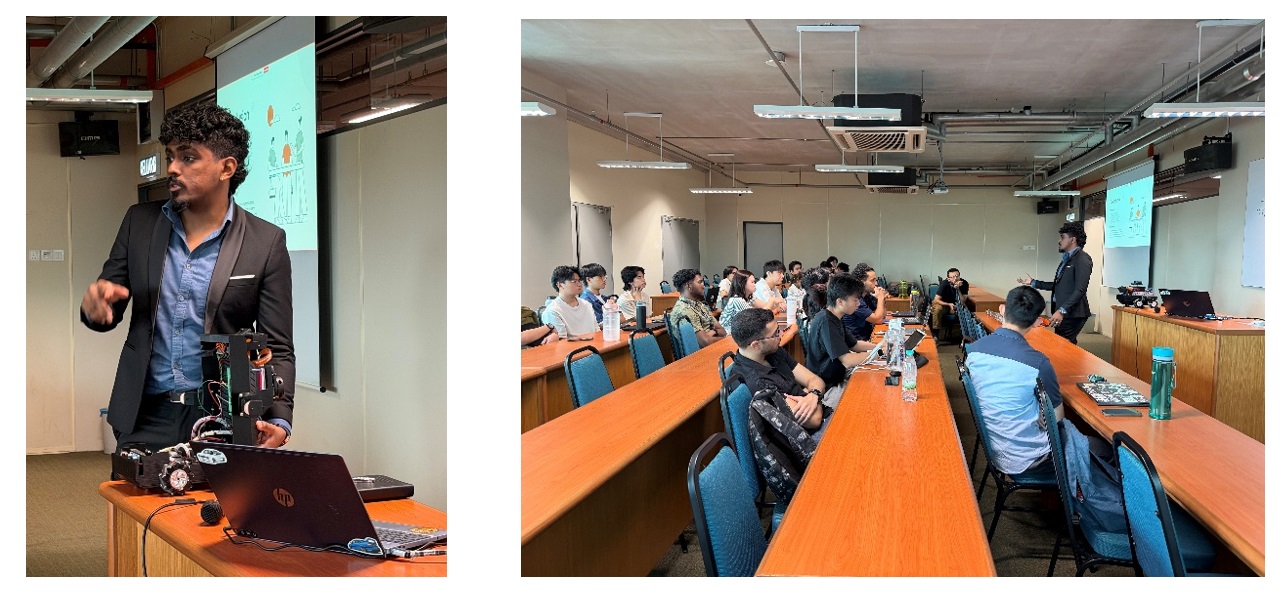
Moderated by Ir Ts Dr Reena Sri Selvarajan, Senior Lecturer and FYP Manager at SoE, the seminar quickly evolved into a vibrant exchange. Originally scheduled for one hour, it extended to nearly two due to the depth of student engagement. 32 undergraduate participants actively contributed through questions, reflections, and discussions, transforming the session into a collaborative learning experience.
The interactive atmosphere revealed a strong appetite among students to move beyond theoretical learning. They sought practical strategies, real-world perspectives, and honest accounts of challenges—evidence of a generation eager to build, test, and refine their ideas in meaningful ways.
Building Strong Research Foundations
A central focus of the seminar was the importance of research discipline—an area often underestimated in early-stage projects. Participants were guided through essential competencies, including systematic literature review techniques, research planning methodologies, and intellectual property (IP) awareness.
Kareshmen emphasised that a strong FYP begins long before prototyping. Understanding existing work, identifying research gaps, and structuring a clear development roadmap are what distinguish a promising idea from a robust engineering solution. The discussion on IP further highlighted how innovation carries both opportunity and responsibility, equipping students with awareness of application processes and potential challenges.
Key Conversations that Shape Futures
Several pivotal themes emerged throughout the session:
- Bridging theory and real-world implementation
- Identifying emerging research trends through structured reviews
- Strategically leveraging internship experiences to strengthen FYP outcomes
- Understanding IP application processes and associated challenges
These conversations reframed the FYP as more than an academic milestone. Students were encouraged to see it as a platform for innovation, societal impact, and professional growth—an opportunity to demonstrate not only what they know, but what they can build.
Reflecting on the session, Dr Reena shared that the seminar was designed to empower students to think critically, work systematically, and approach research with confidence. By demystifying the research process, the School aims to nurture engineers who are analytical, adaptable, and industry-ready.
Cultivating Engineers for Tomorrow
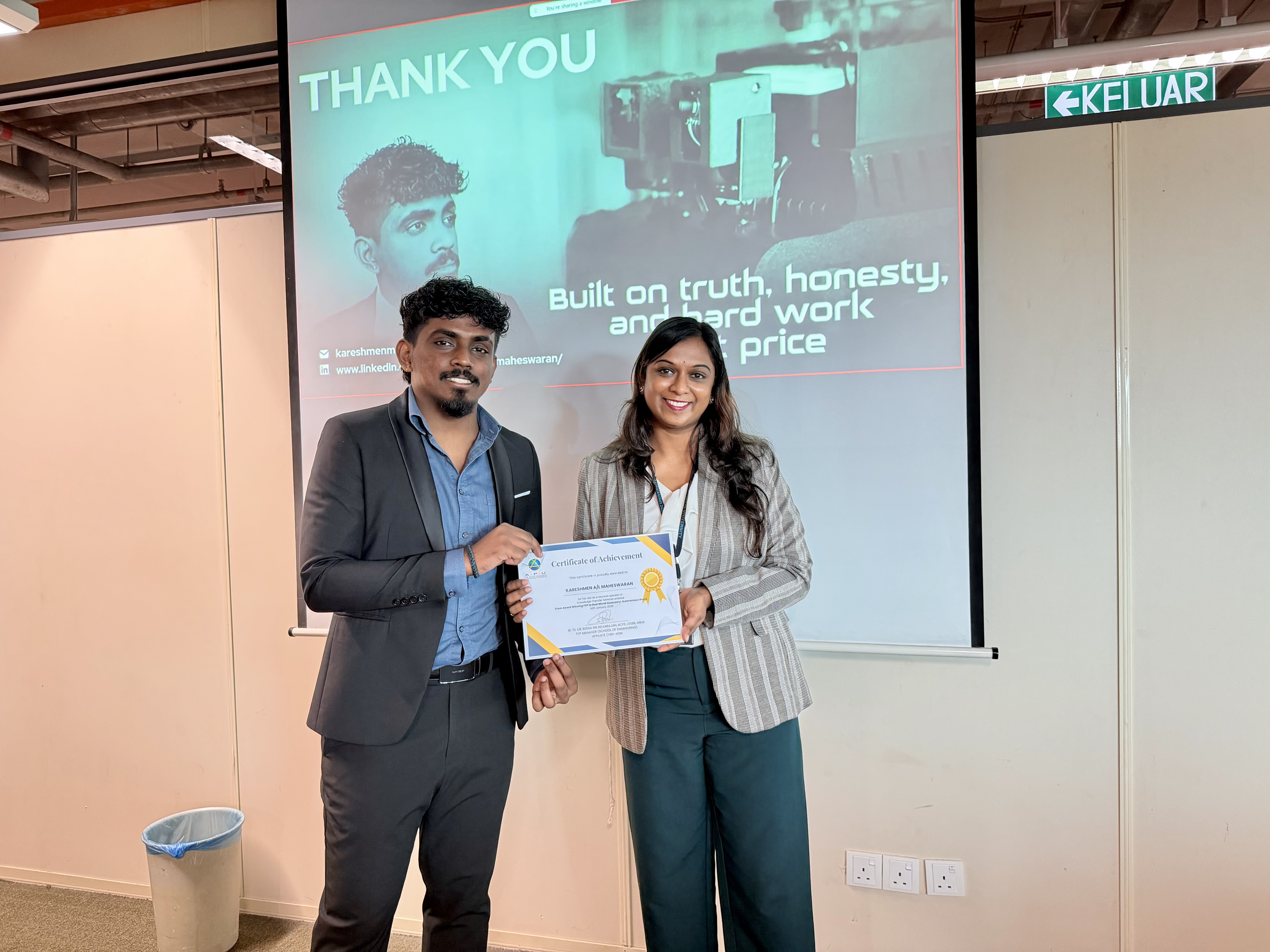
The School of Engineering extends its sincere appreciation to Kareshmen for his meaningful knowledge sharing and commitment to student development. His journey stands as a living example of what is possible when academic effort is aligned with real-world purpose.
This seminar reflects APU’s ongoing commitment to fostering knowledge transfer, experiential learning, and research excellence. With the seeds of curiosity, strategy, and impact now planted, the School of Engineering looks forward to seeing these ideas grow into innovative and transformative Final Year Projects.
Associate Professor Ir Dr Siva Kumar Sivanesan, Head of the School of Engineering, affirmed, “An FYP should be the moment a student begins to think like an engineer in the real world. When our students learn to research with depth, design with purpose, and build with confidence, they graduate not merely with a degree, but with the mindset and readiness to shape the future.”
News & Happening
Download e-Brochures
Intake Calendar
Want to know more ?
Let’s Connect