APU Mechatronics Engineering student Raveen Sangaran won the Bronze Medal (Tertiary Category) at the International Virtual Innovation Competition (VIC) 2026 for his Final Year Project, Solarbeat: Solar-Powered Intelligent Heart Rate Monitoring Wristband, a research-driven innovation developed under APU’s Research Development and Innovation Grant (RDIG) on self-powered wearable healthcare technologies.
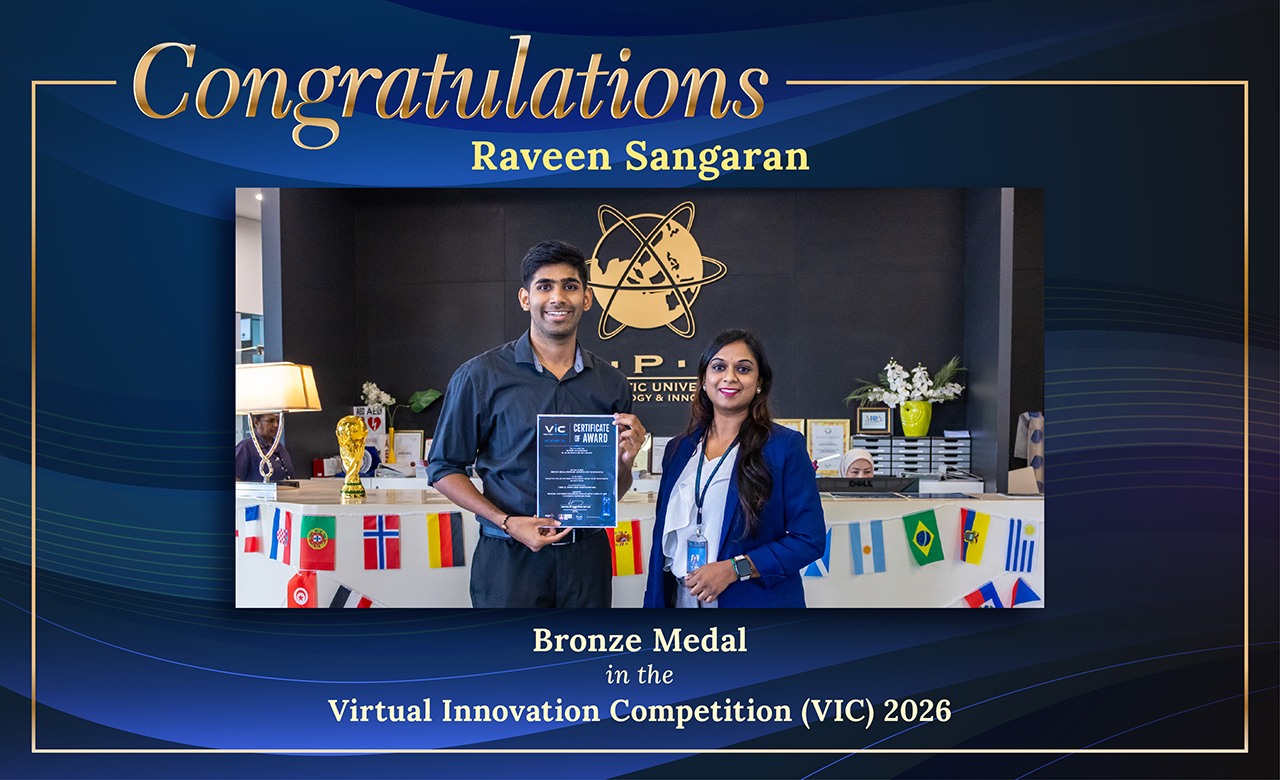
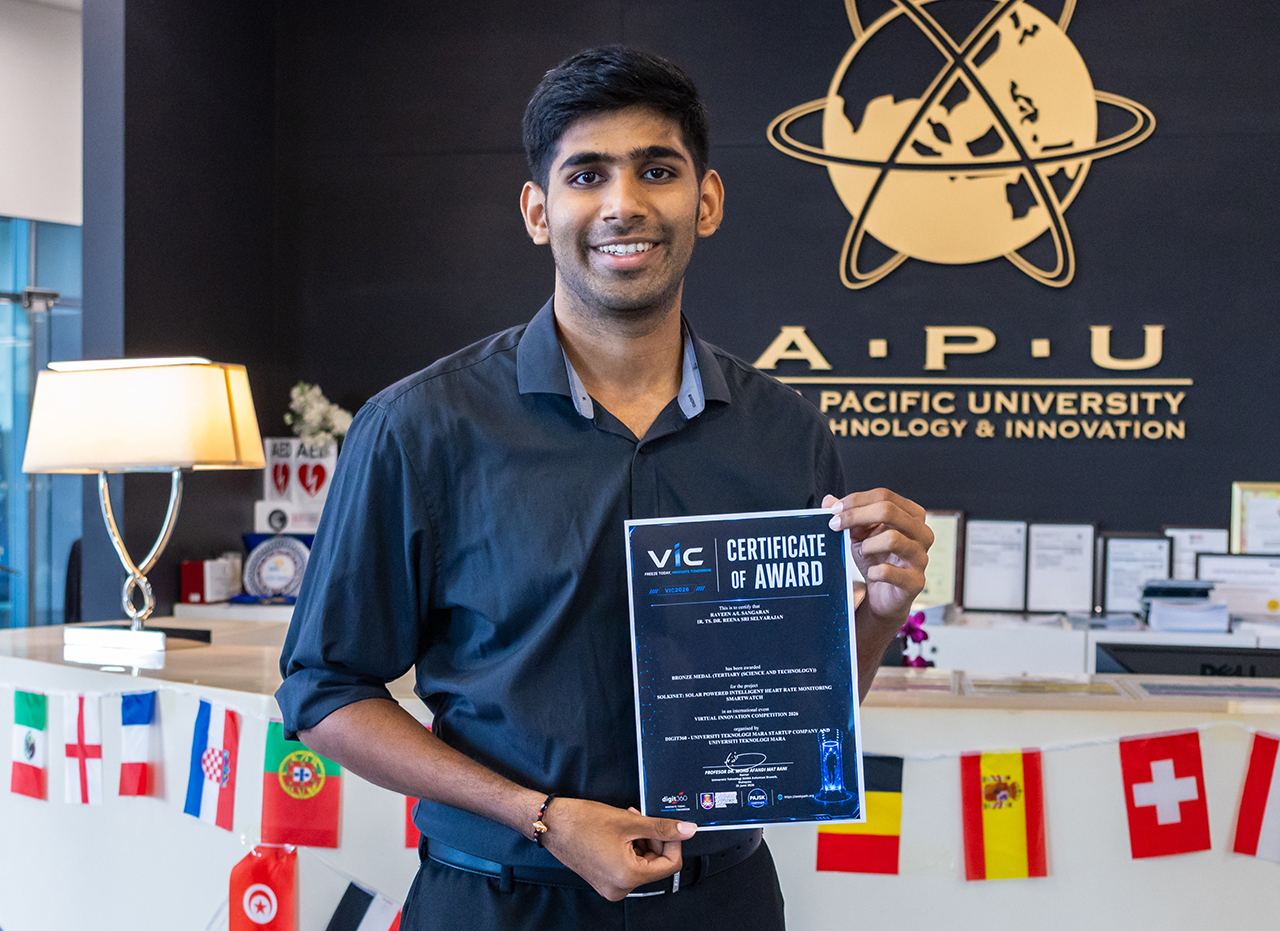
An innovative Final Year Project (FYP) developed through APU’s research-driven education approach by Mechatronics Engineering student Raveen Sangaran earned international recognition after winning the Bronze Medal (Tertiary Category) at the International Virtual Innovation Competition (VIC) 2026.
The prestigious online innovation exhibition and pitching competition, co-organised by Universiti Teknologi MARA (UiTM), attracted outstanding innovations from universities across Malaysia and abroad.
The VIC 2026 concluded with its online award ceremony held on 23 June 2026 following the completion of its submission and evaluation process.
Raveen’s project, Solarbeat: Solar-Powered Intelligent Heart Rate Monitoring Wristband, competed against entries from leading institutions and, ultimately emerging as one of the competition’s top achievers.
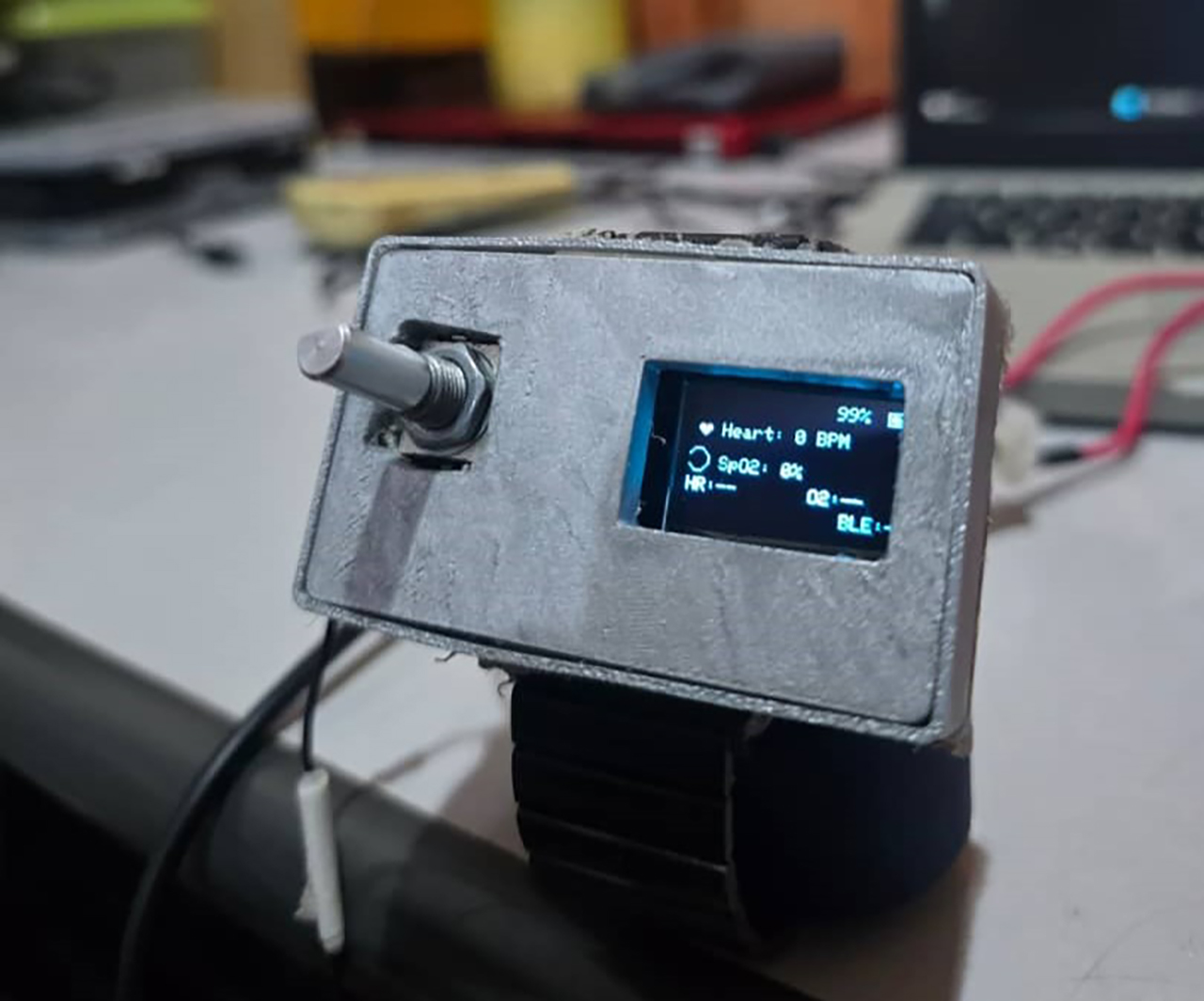
Solarbeat is a sustainable wearable healthcare device that combined renewable energy harvesting, intelligent physiological monitoring and embedded biomedical engineering to support continuous health monitoring.
The project was developed under the supervision of Ir Ts Dr S. Reena Sri Selvarajan, Senior Lecturer and Principal Investigator at the School of Engineering (SoE).
The project formed part of an active Research Development and Innovation Grant (RDIG) on self-powered wearable healthcare technologies, reflecting APU’s research-informed teaching philosophy by enabling undergraduate students to contribute to ongoing research while developing practical engineering solutions.
By combining scientific research with hands-on prototype development and technology validation, the project enabled Raveen to experience every stage of the innovation journey — from identifying engineering challenges and applying scientific principles to designing, developing and evaluating a functional prototype.
The wearable device integrated solar energy harvesting, photoplethysmography (PPG)-based heart rate sensing, embedded intelligence and wireless connectivity to create a self-powered smart healthcare solution capable of continuous cardiovascular monitoring.
By reducing dependence on conventional battery charging, the innovation demonstrated significant potential for preventive healthcare, remote patient monitoring and future digital health applications.
The prototype also achieved an estimated Technology Readiness Level (TRL) 6–7, indicating that the technology had progressed beyond laboratory validation and demonstrated strong potential for further development and commercialisation.
Beyond its technological capabilities, Solarbeat supported several of the United Nations Sustainable Development Goals (SDGs), particularly SDG 3 (Good Health and Well-being) through continuous health monitoring, SDG 7 (Affordable and Clean Energy) by incorporating renewable energy into wearable technology, and SDG 9 (Industry, Innovation and Infrastructure) by advancing sustainable biomedical engineering innovation.
According to Ir Ts Dr S. Reena, integrating students into active research projects enabled them to develop innovative technologies while strengthening their engineering and research capabilities.
“Research should not remain confined within laboratories. One of our goals is to transform knowledge into practical solutions that create meaningful impact.
“By integrating students into active research projects, Final Year Projects become opportunities to develop technologies that can potentially benefit society,” she said.
She added that APU believed FYPs should extend beyond fulfilling academic requirements and instead become platforms that encouraged innovation and generated meaningful impact for end users.
“By integrating students into active research, they gain the opportunity to develop technologies that create meaningful societal impact while strengthening their research, engineering and innovation capabilities,” she said.
Turning research into impact
Reflecting on his award-winning innovation, Raveen explained that Solarbeat was designed as a solar-powered smartwatch capable of extending battery life through renewable energy while reducing the need for frequent charging.
The device monitored heart rate, blood oxygen saturation (SpO₂), heart rate variability (HRV) and displayed real-time photoplethysmography (PPG) waveforms.
It also tracked daily physical activities such as step count and incorporated Bluetooth Low Energy (BLE) connectivity with a graphical user interface (GUI), allowing users to monitor their health data wirelessly on external devices.
He believed the project stood out because it combined sustainability, practical engineering and user-centred healthcare innovation within a single wearable solution.
With Dr Reena’s mentorship, he was able to refine the design, overcome technical challenges and successfully develop a fully functioning prototype that clearly demonstrated the project’s practical applications and societal benefits.
“From this competition, I learned how to transform an idea into a real-life prototype and effectively communicate the concept through a video presentation. I also improved my skills in project development and learned how to explain the technical aspects of our solution in a clear and understandable way,” said Raveen.
He added that participating in the competition had been an invaluable learning experience that strengthened both his technical knowledge and communication skills.
“This competition added value to my course because it allowed me to apply my engineering knowledge to a real-life project.
“It also exceeded my expectations by improving technical skills, creativity and confidence in presenting project,” he said.
Encouraged by the experience, Raveen expressed his interest in participating in more engineering competitions in the future, believing such platforms provided valuable opportunities to apply classroom knowledge, develop new skills and transform innovative ideas into practical engineering solutions.
His success also reflected the strength of APU’s research-driven engineering education, where students were encouraged to engage in innovation beyond the classroom and develop technologies with genuine societal value.
The recognition at VIC 2026 demonstrated how undergraduate research, when supported by strong academic mentorship and industry-relevant research, could produce innovations capable of competing successfully on the international stage.
As emerging technologies continued to shape the future of healthcare and sustainability, achievements such as Solarbeat highlighted the growing role of young engineers in addressing global challenges through creative thinking, interdisciplinary collaboration and technological innovation.
News & Happening
Download e-Brochures
Intake Calendar
Want to know more ?
Let’s Connect