APU Master’s students in an Artificial Intelligence (AI) module explored Carnatic music through Naad Quest, an interactive card game developed by Mrs Dhashani Ganesalingam, as part of APU’s AI + Culture Futures Lab, which combined cultural learning with strategy, problem-solving and teamwork.
Image
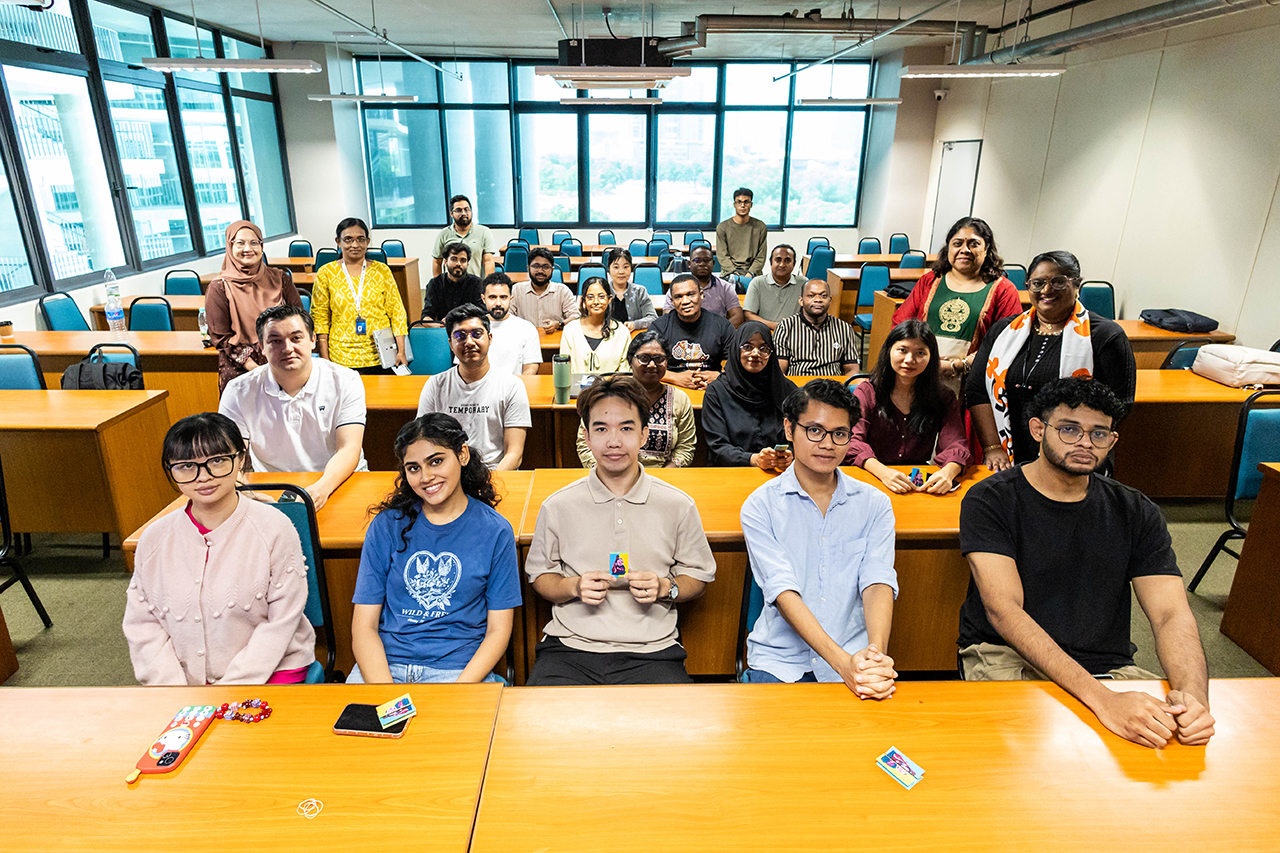
For a group of international students studying an Artificial Intelligence (AI) module at Asia Pacific University of Technology & Innovation (APU), learning about AI took an unexpected turn when they found themselves exploring the centuries-old traditions of Carnatic music through a deck of cards.
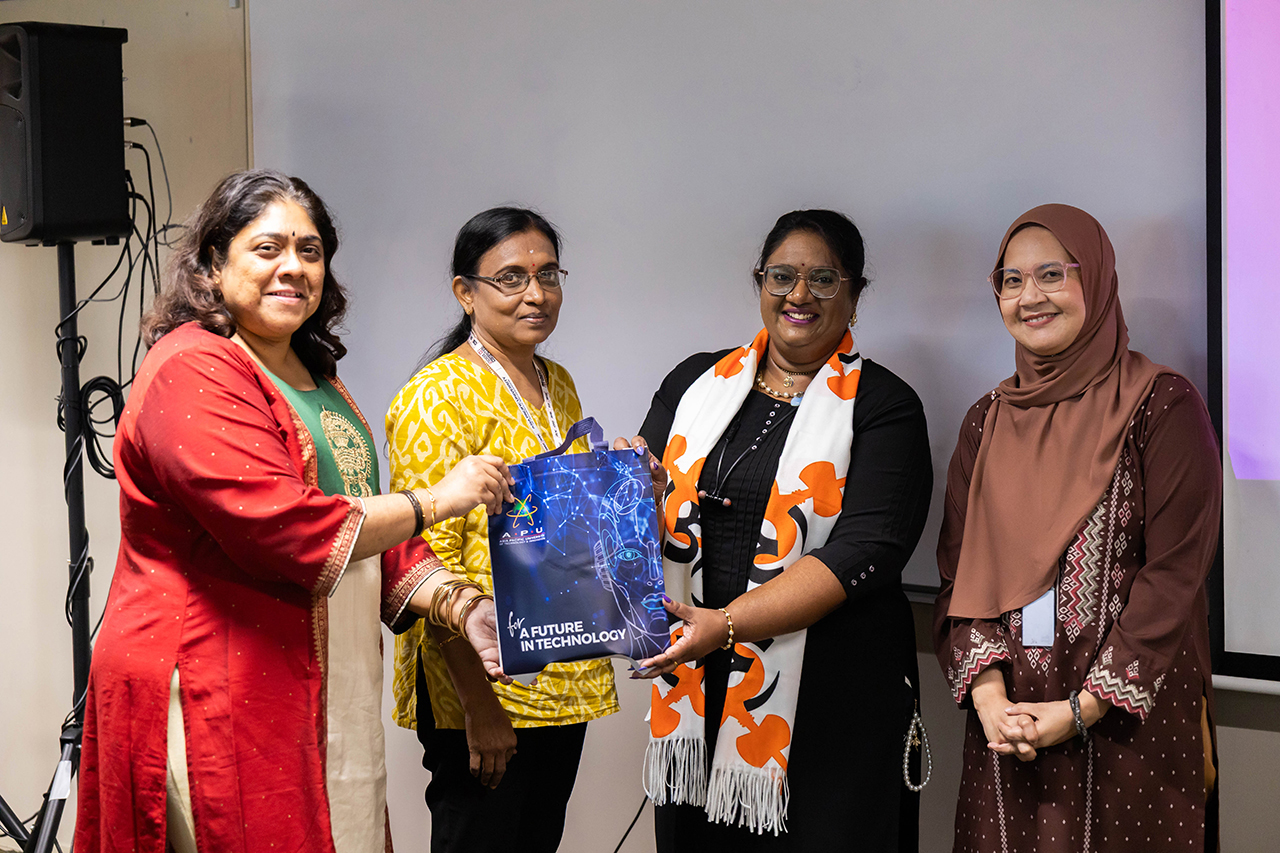
The students, representing different countries and cultural backgrounds, were introduced to Carnatic music through Naad Quest, an interactive educational card game created by Ms Dhashani Ganesalingam, Founder and Director of Nadhalaya Music Academy, Malaysia.
The engaging session took place under the AI + Culture Futures Lab, an initiative led by Associate Professor Ts Dr Vinothini Kasinathan, with support from Ms Sarimah Samsudin and Ms Vasugi Jayamangalam from APU’s School of Computing (SoC).
The initiative encouraged students to recognise culture as an important area for research and as a meaningful starting point for responsible AI development.
Rather than learning Carnatic music through conventional lessons, students discovered its concepts through play, communication, strategy, teamwork and problem-solving.
Ms Dhashani holds Bachelor’s and Master’s degrees in Carnatic Music from Annamalai University, India, and has been teaching the art form since 2007.
She created Naad Quest to make Carnatic music more accessible and enjoyable, particularly for people with little or no previous musical knowledge.
The series consists of three card games — Naad Melam Quest, Naad Swara Quest and Naad Thala Quest — with each game introducing a different aspect of Carnatic music through interactive gameplay.
Designed for three to 12 players, the 72-card Naad Melam Quest introduced players to the 72 Melakartha ragas and their organisation into 12 chakras.
Players asked one another for a chakra family and then requested a specific raga card. A correct request allowed the player to collect the card; otherwise, the player drew a random card from the opponent’s hand.
The first player to collect all six raga cards belonging to one chakra won.
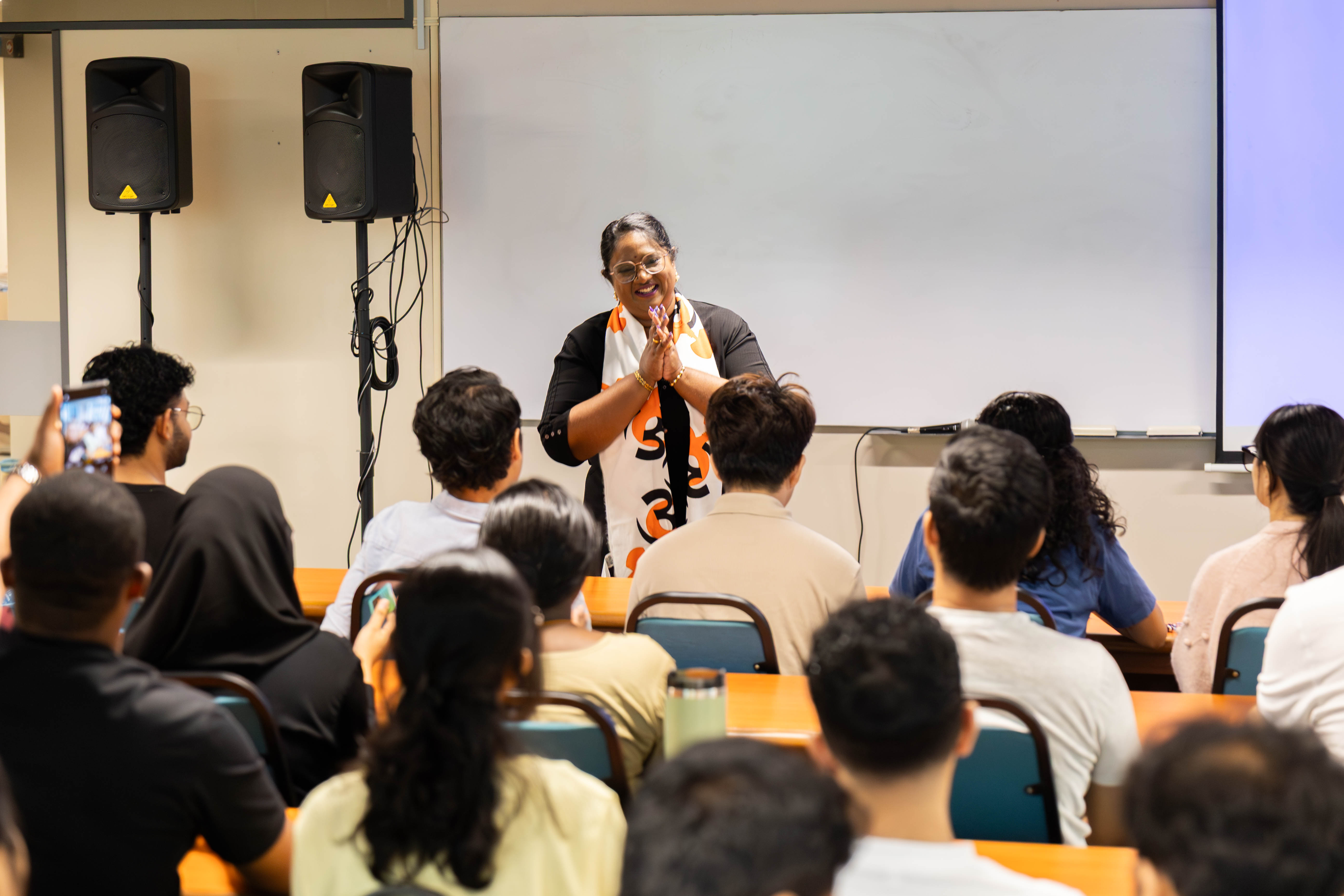
Through memory, strategic questioning and repeated exposure to raga and chakra names, the game helped beginners recognise and discuss the classification of parent ragas in a more accessible way.
The 78-card Naad Swara Quest introduced players to the seven swaras — Sa, Ri, Ga, Ma, Pa, Dha and Ni — and how they combine to form a Melakartha raga.
Players drew and discarded cards while working towards a correctly ordered seven-card scale, with one card representing each swara position. Star cards acted as wild cards, while Rotate cards changed the direction of play.
Once a scale was completed, players could demonstrate their learning at three levels: reading the seven cards in sequence, singing the swaras using solfa, or identifying the chakra, Melakartha number and raga represented by the scale.
Combining rhythm with mental calculation, Naad Thala Quest introduced players to the seven Suladi Thalas, five Jatis and their Akshara counts.
A Thala card and Jati card were revealed, and players calculated the total number of beats in the rhythmic cycle. They then played an Akshara card that was a multiple of that cycle and announced the number of cycles represented.
A correct response allowed the player to collect the Thala–Jati pair, with the player who collected the highest number of pairs emerging as the winner.
By displaying the Anga structure and Laghu count on the cards, the game provided useful visual support for beginners while developing concentration, mental calculation, rhythmic understanding and quick decision-making.
From playing cards to cultural discovery
The students responded enthusiastically to the experience, particularly as many were encountering Carnatic music for the first time.
Through the three games, they discovered that cultural knowledge could be explored through social interaction, strategic thinking, pattern recognition and problem-solving.
Naad Thala Quest generated particular interest as its rhythm-based challenges required players to concentrate, calculate quickly and respond accurately.
The activity demonstrated how cultural learning could go beyond gaining knowledge of a tradition, while also encouraging analytical thinking, communication and collaborative decision-making.
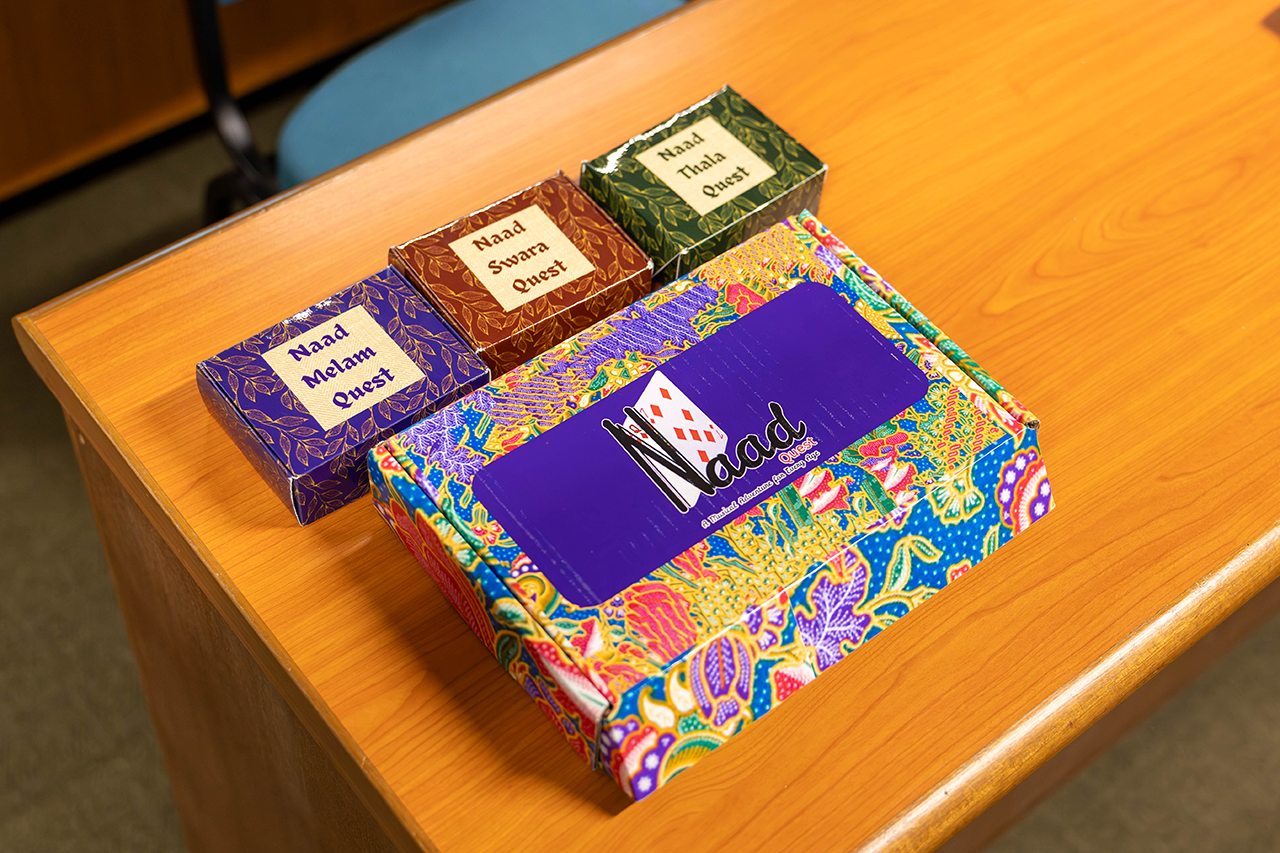
The session also encouraged students to consider how AI could be meaningfully connected with cultural knowledge as they developed potential framework ideas for their Master’s final projects.
Students were reminded that AI should complement rather than replace cultural practitioners, with cultural authenticity, community knowledge and the meaning of the tradition remaining central to any proposed technological solution.
For the students, the experience was not simply about learning the fundamentals of Carnatic music. It also provided an opportunity to examine how educational game design could influence engagement and learning.
Ramya Prabhakaran from India said she particularly enjoyed playing the games based on Melam, Swara and Thala.
“It is a unique and creative concept, and I love how it makes learning about music fun and interactive. The card games are especially enjoyable and engaging. I truly appreciate the effort and creativity that goes into designing such an interesting game.”
Anoofa Ahmed Didi from the Maldives also appreciated how the Swara and Thala games used strategic card gameplay to make learning about music and culture more enjoyable.
“I love how Swara and Thala use strategic card gameplay to make learning about music and culture feel fun. The experience makes me realise how engaging lessons can be when we use interactive games.”
For Thrishneshvarr Nageen from Malaysia, the experience also highlighted opportunities to strengthen the multiplayer interaction within some of the games.
He found the game featuring Sangitham notes enjoyable but felt that it could provide players with more reasons to interact with one another.
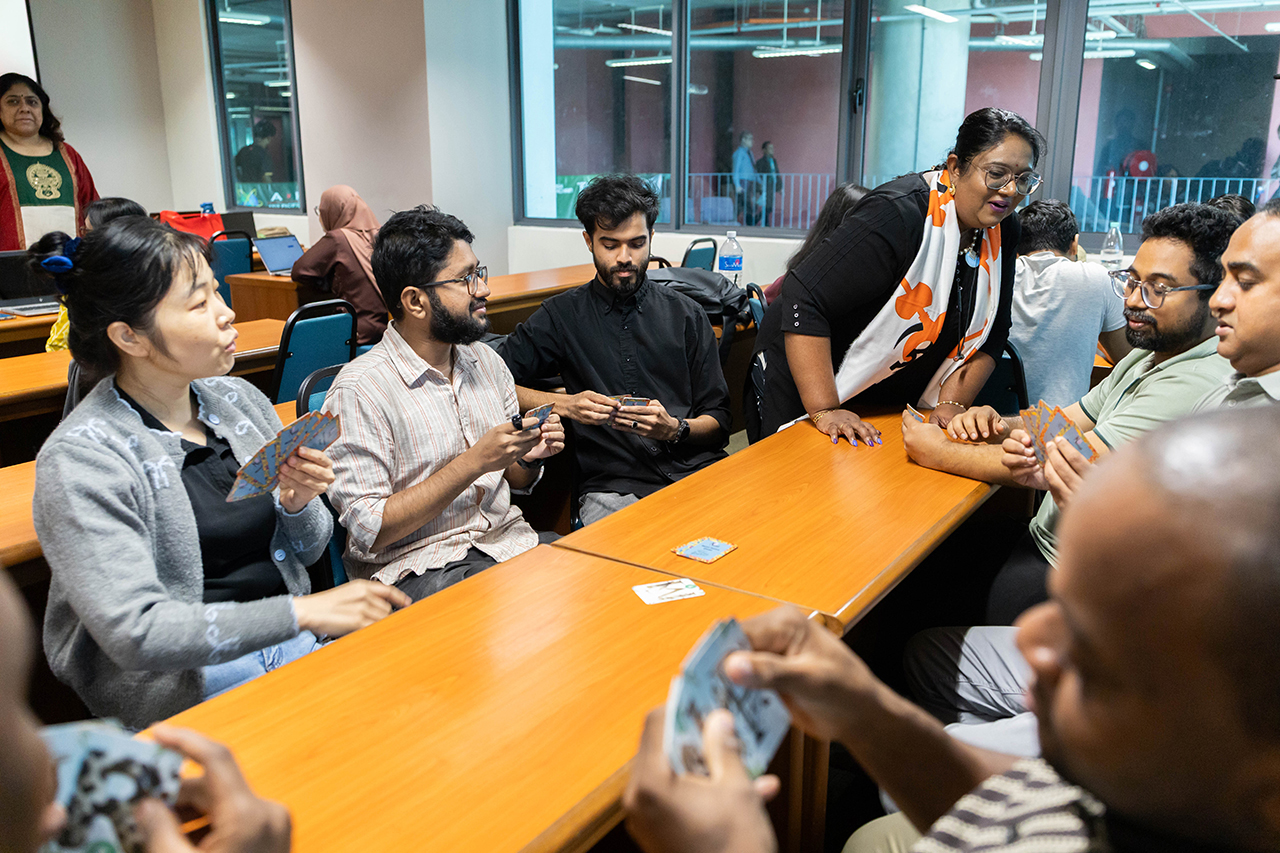
“The game with the Sangitham notes is fun, but it does not provide a strong reason to interact with the other players. In this case, the game can be played by one player, and even with more players, it can still feel like everyone is playing by themselves.”
Students who played the game pointed out that it offered strong concepts, while suggesting additional mechanics to encourage greater interaction between players and make the gameplay more engaging.
They pointed out that Swara was played like UNO and Melam like Happy Family, while Thala played like Snap.
“The concept is good, but giving players a stronger reason to interact, or making the presence of more players add greater challenge, could make the game more engaging.
“For example, allowing players to steal cards from one another or increasing the number and variety of power cards could create more interaction,” they said.
They suggested introducing a clearer sequence for requesting cards from other players to make the gameplay more organised.
“Adding a rule where a player can only ask another player for a card during their turn could make the game easier to follow,” they added.
The collaboration between APU’s SoC and Nadhalaya Music Academy reflected the broader purpose of the AI + Culture Futures Lab — encouraging students to begin with a genuine cultural need before considering how AI might contribute to a solution.
Through Naad Quest, students experienced first-hand how traditional knowledge, educational game design and responsible AI thinking could come together to create culturally meaningful opportunities for research and innovation.
For students preparing to shape the next generation of AI technologies, the experience offered an important lesson: innovation does not always begin with technology.
Sometimes, it begins with listening, understanding and appreciating the culture that technology seeks to serve.
News & Happening
Download e-Brochures
Intake Calendar
Want to know more ?
Let’s Connect