APU Psychology students earned top recognition at MYCS 2026 for transforming classroom learning into award-winning cyberpsychology projects, demonstrating how young talents can apply psychological insights, creativity and research skills to address real-world digital-age issues while contributing to safer, more meaningful and human-centred online and offline interactions.
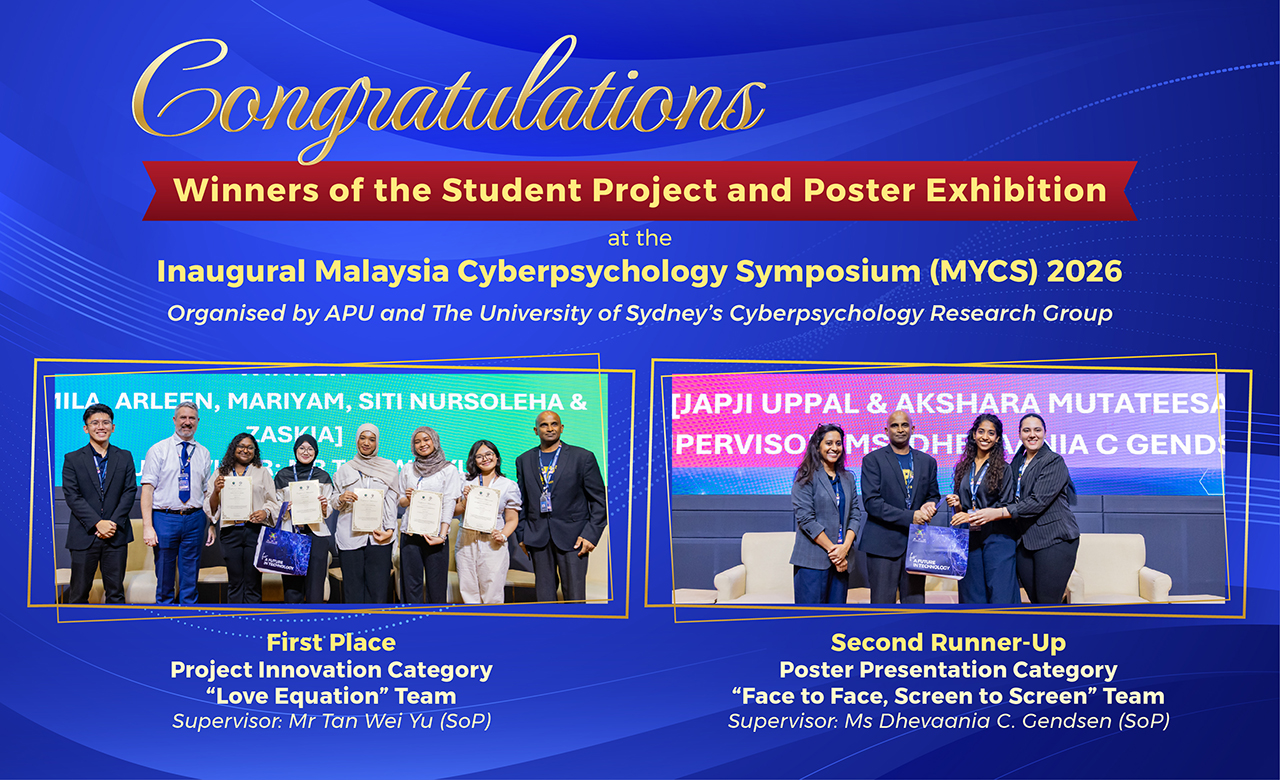
Five Bachelor of Science (Honours) in Psychology students from Asia Pacific University of Technology & Innovation (APU) achieved a milestone at the inaugural Malaysia Cyberpsychology Symposium (MYCS) 2026, clinching top awards for posters and projects that explored how psychology can respond to digital issues.
Image
Organised by APU and the University of Sydney’s Cyberpsychology Research Group on 23 May 2026, MYCS 2026 brought together students, academics, researchers and industry representatives to examine human behaviour. A key highlight was the Student Project and Poster Exhibition, which featured 24 research posters and 10 projects.
Participants came from psychology, technology and computing disciplines across APU, Taylor’s University, New Mind Brain Health Centre, Universiti Putra Malaysia (UPM) and the International Islamic University Malaysia (IIUM). Evaluated by visiting industry leaders, academics and research partners, the exhibition gave students a platform to present ideas grounded in digital life.
Turning Theory into Play
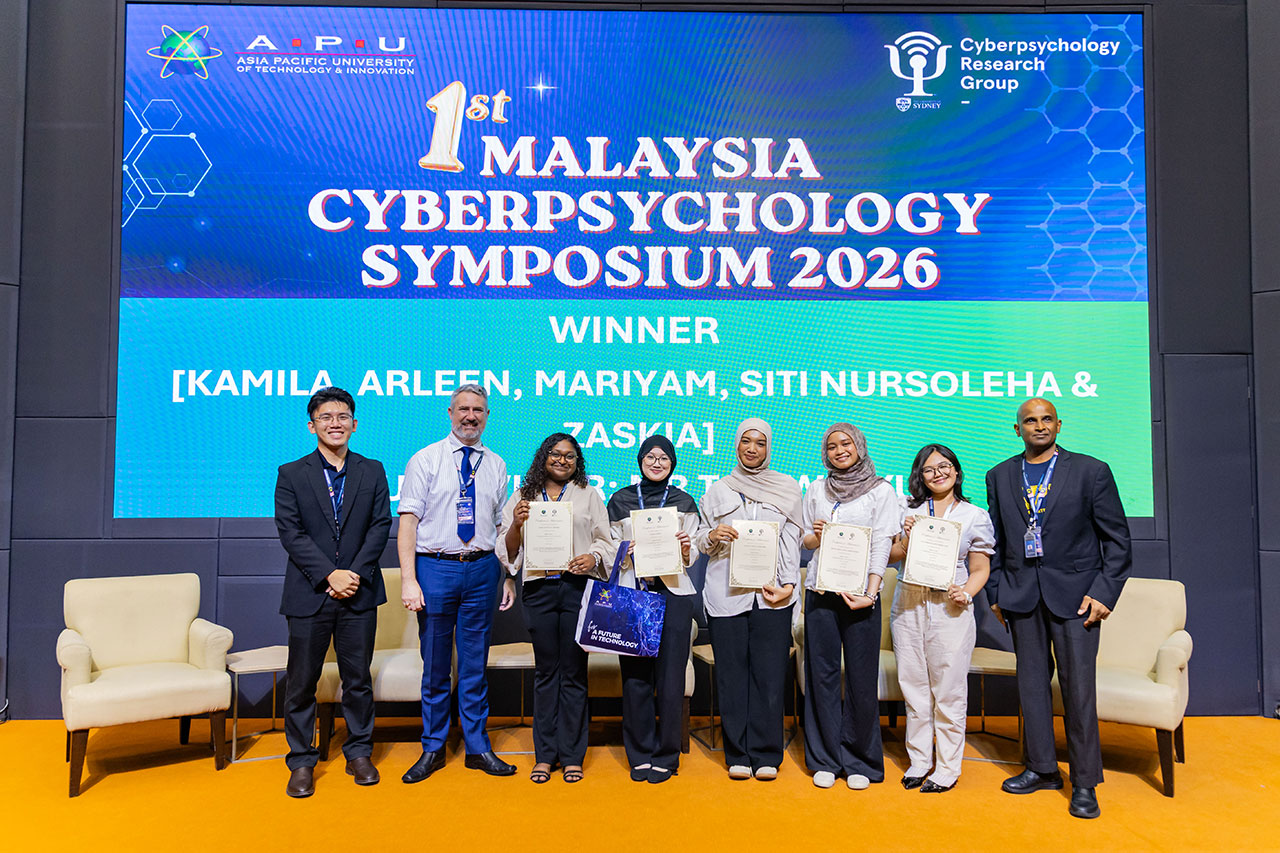
APU students Arleen Soraya Binti Mohd Jeffery, Kamila Bahlia, Mariyam Thanaal Rizwee, Siti Nursoleha Binti Mohd Nazri and Zaskia Yasmin Syahwendra won First Place in the Project Innovation Category for “Love Equation”.
The winning project is a strategy card game inspired by Sternberg’s Triangular Theory of Love. Players collect points across intimacy, passion and commitment while navigating “chaos” and “attack” cards that represent setbacks. The objective is to achieve “consummate love”, reflecting the balanced integration of all three components.
By translating a psychological theory into an interactive experience, the students created a low-pressure way for young adults to reflect on communication, emotional intelligence and relationship dynamics. Instead of remaining a classroom-only concept, the project showed how psychology can be accessible and meaningful.
“What stood out to me was how naturally the team transformed an abstract theory into something playable and thought-provoking. They did not merely explain Sternberg’s model; they created a game where balance has to be earned, challenged and protected, just as relationships are in real life,” said Mr Tan Wei Yu, Lecturer at APU’s School of Psychology.
He added, “It was rewarding to see them take what they had learned in class and turn it into a creative project that others could understand and enjoy. Their work reflects academic understanding and the confidence to apply knowledge beyond the classroom.”
Exploring Digital Distraction
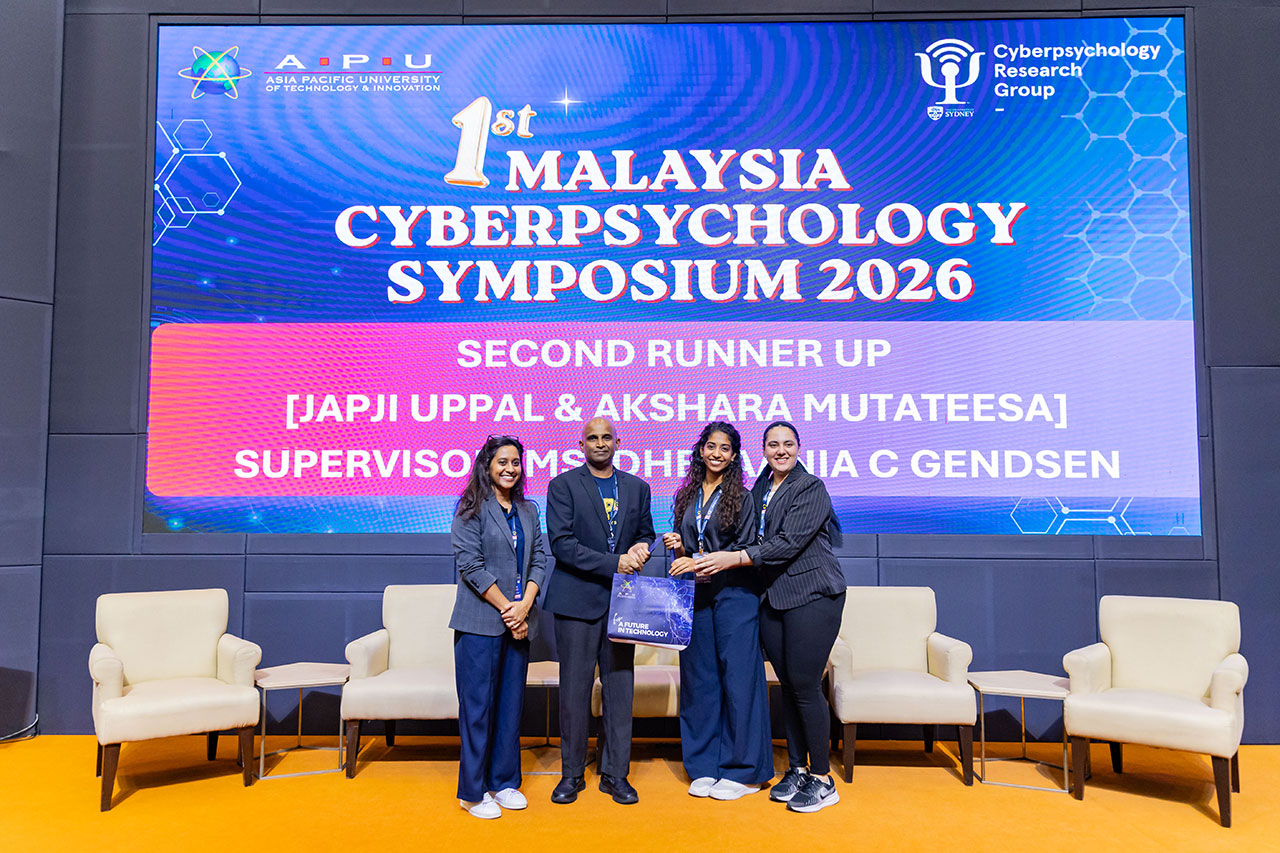
APU’s success continued through psychology degree students, Japji Uppal and Akshara Mutateesa, who received Second Runner-Up for their poster presentation, “Face to Face, Screen to Screen: How Digital Distraction is Reshaping Real Interaction”.
Their project examined a paradox of the digital age: while technology has expanded connectivity, it has also affected the quality of face-to-face interaction. Focusing on phubbing, the students explored how smartphone use can create emotional distance even when people are together.
Drawing on cyberpsychology perspectives, their study looked at how constant digital engagement affects attention, empathy, social presence and interpersonal relationships. It highlighted how digital distraction may reduce relationship satisfaction, weaken social bonds and make meaningful conversations more difficult, particularly among younger generations.
By raising awareness of digital habits and their impact on relationships, the project encouraged mindful technology use and deeper conversations about preserving authentic human connection in a screen-driven world.
“Japji and Akshara showed strong dedication in examining how digital distraction affects human relationships. Their enthusiasm for applying cyberpsychological concepts to real-world issues was evident throughout the project,” said Ms Dhevaania C. Gendsen, Lecturer at APU’s School of Psychology.
She added, “Through critical inquiry and thoughtful analysis, they highlighted the importance of mindful technology use and meaningful human connection. Their work reflects academic excellence, as well as a genuine commitment to raising awareness of challenges faced by individuals and communities in an increasingly digital society.”
Future-Ready Minds
These achievements carry institutional impact for APU, demonstrating the University’s strength in nurturing interdisciplinary, future-ready talents who can connect psychological insight with technological realities.
As MYCS 2026 was organised with APU’s international partner, the University of Sydney’s Cyberpsychology Research Group, the recognition further elevated the students’ work to a global standard.
More importantly, the victories showed that APU students are already engaging with real-world problems from campus, even before entering their professional careers. Through creativity and critical thinking, they are proving that young minds can contribute to safer, healthier and more human-centric digital spaces.
News & Happening
Download e-Brochures
Intake Calendar
Want to know more ?
Let’s Connect