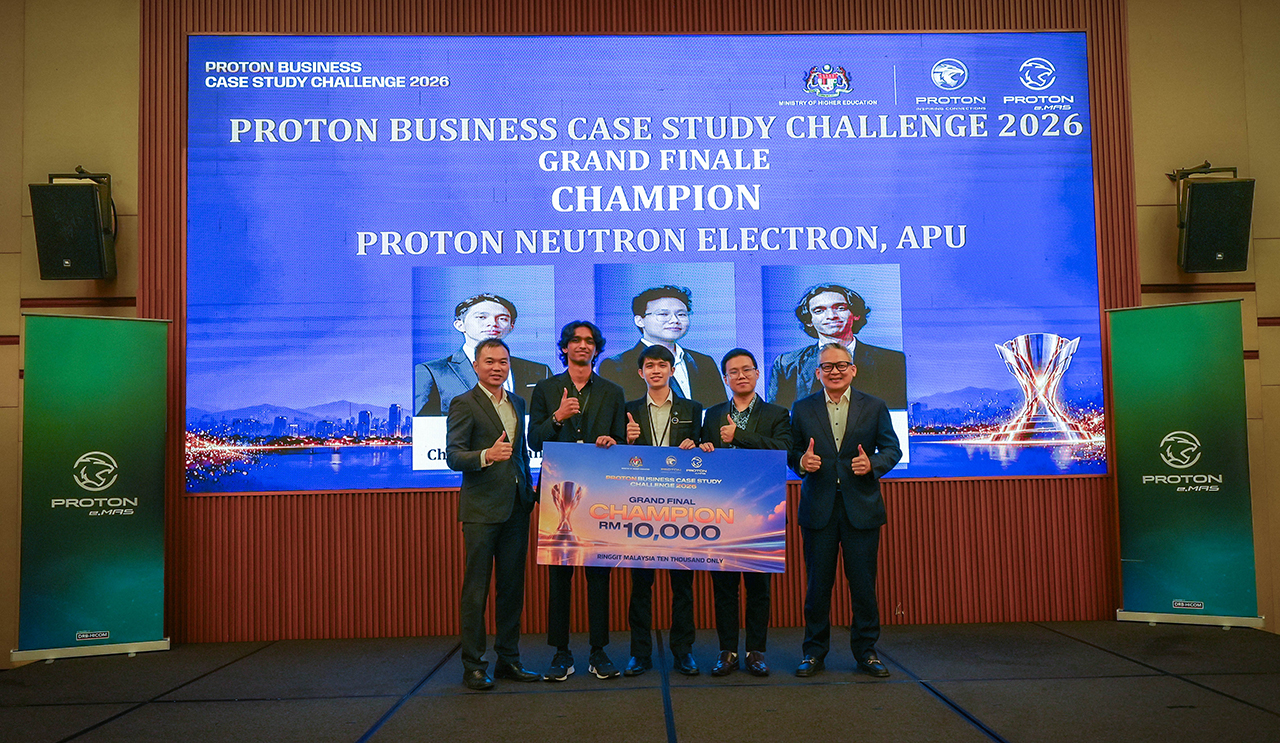
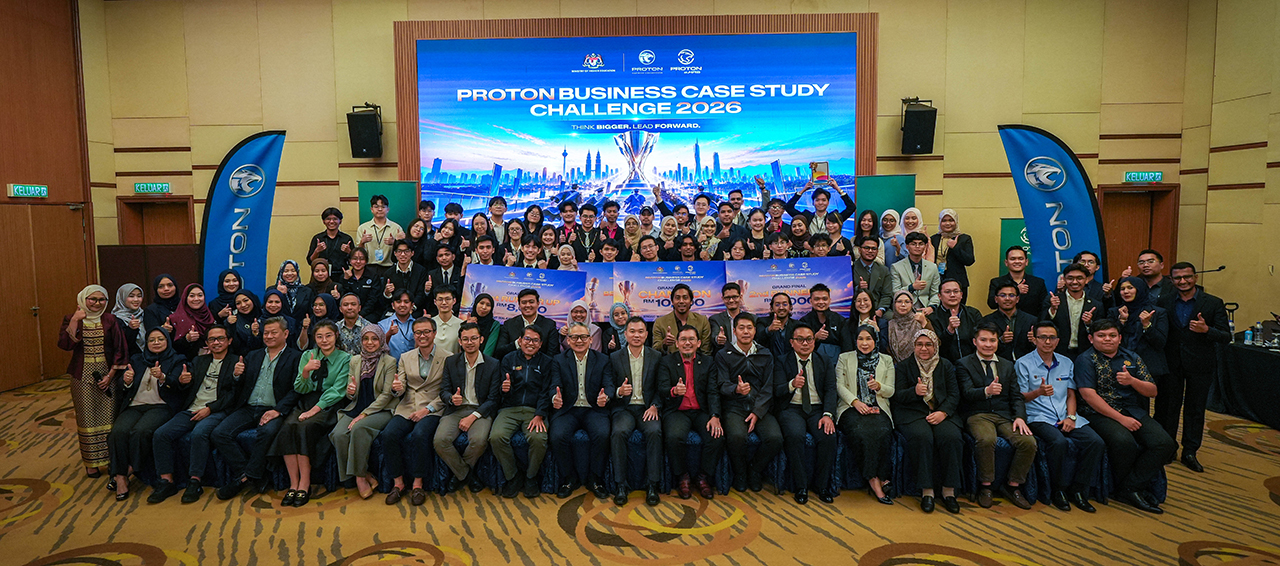
Competing against a record 56 university teams nationwide, APU made a winning debut at the PROTON Business Case Study Challenge (PBCSC) 2026, co-organised with the Ministry of Higher Education (MoHE), where team Proton Neutron Electron clinched the championship title and RM10,000 for their Generation Z electric vehicle (EV) adoption strategy, while Topaz Lim Jing Tai won the Best Individual Presenter Award (RM1,000), and two team members received conditional offers to join the PROTON Young Talent Programme.
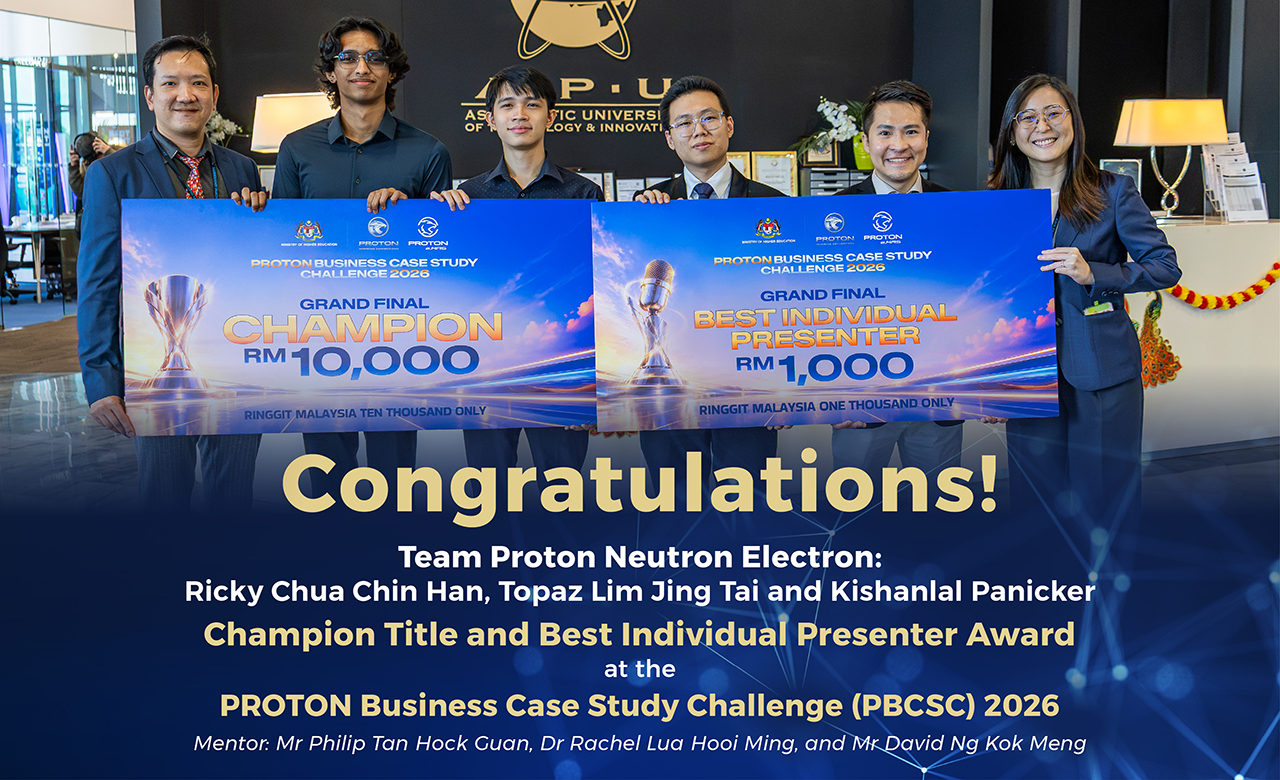
Making a remarkable debut in the national arena, Asia Pacific University of Technology & Innovation (APU) captured both the Championship Title and the Best Individual Presenter Award at the PROTON Business Case Study Challenge (PBCSC) 2026.
Organised in partnership with the Ministry of Higher Education (MoHE), the prestigious competition tested Malaysia’s sharpest young minds against one of the automotive sector’s most pressing questions: how to make electric vehicles (EVs) the first-car choice for Generation Z.
Flying the APU flag at the very top of the podium was team Proton Neutron Electron, comprising Ricky Chua Chin Han, Topaz Lim Jing Tai and Kishanlal Panicker claimed the championship crown and the RM10,000 grand prize out of a total RM24,000 prize pool.
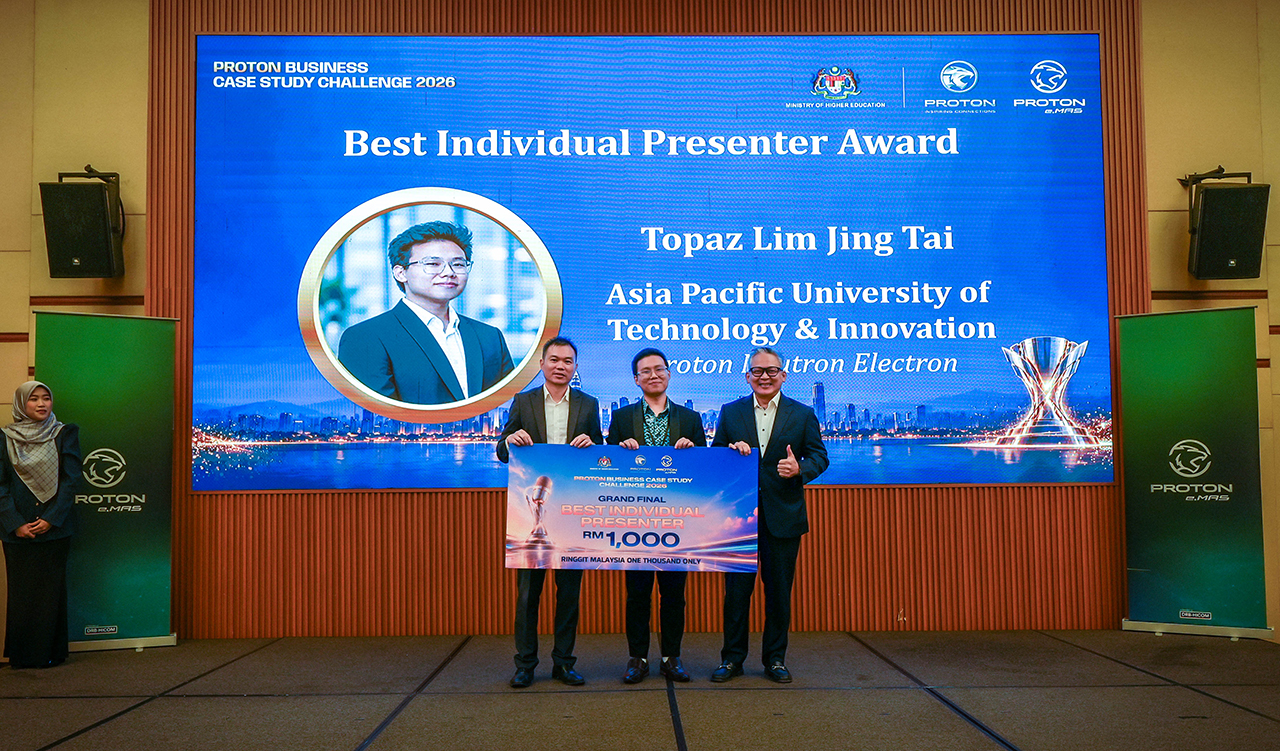
Sweetening the success, Topaz Lim Jing Tai stood out among the nation’s finest speakers to win the PBCSC Best Individual Presenter Award, earning an additional RM1,000 cash prize for his commanding delivery and persuasive pitch.
The road to victory was fiercely contested. This year’s challenge drew a record-breaking 56 teams from public and private universities across Malaysia, marking a 33 per cent surge in participation compared to 2025.
From that competitive field, only 18 finalists advanced to the grand finale to defend their strategies before an esteemed panel of industry and policy leaders.
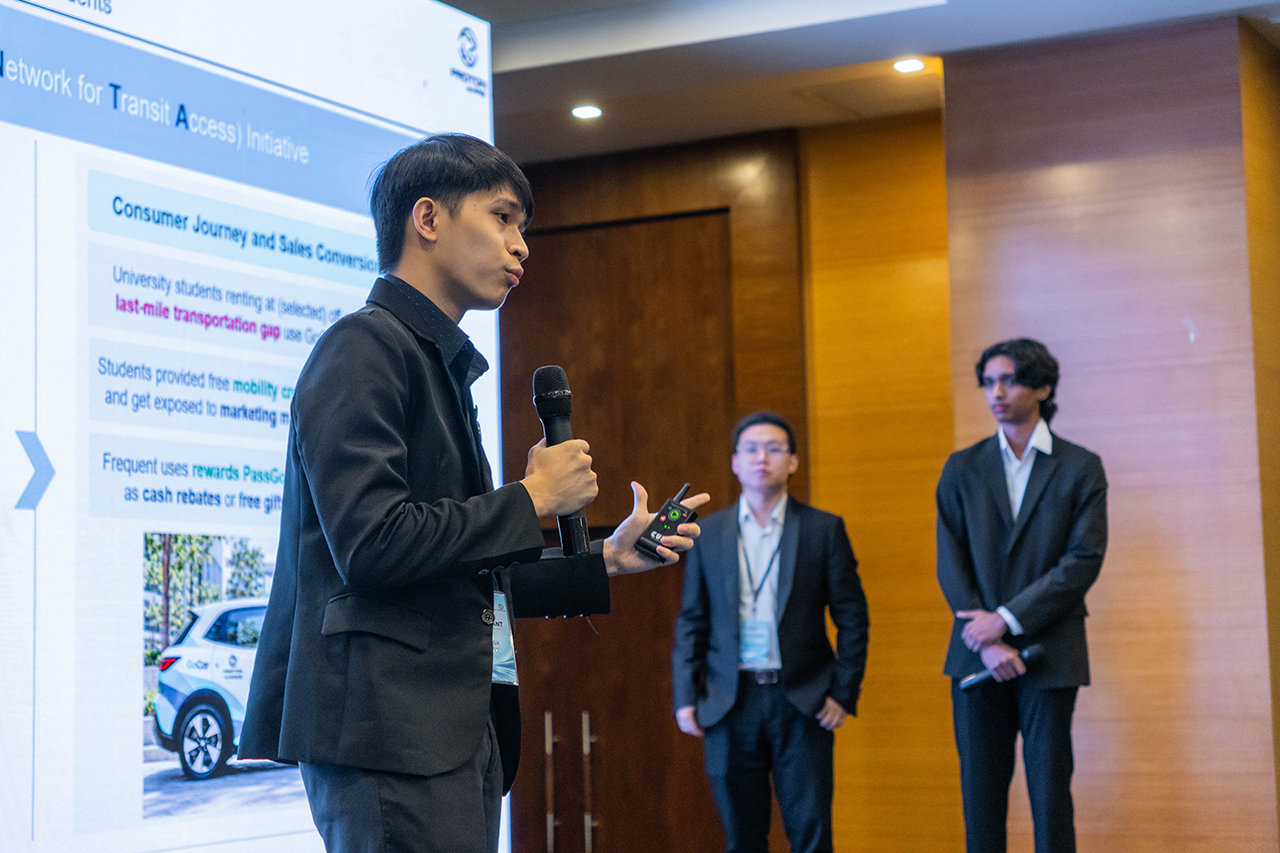
While the preliminary rounds were evaluated by senior figures from PROTON’s Research and Development (R&D), PRO-NET, and Human Capital & Administration divisions, the grand finale raised the stakes further with the addition of judges from MoHE and the Malaysia Automotive, Robotics and IoT Institute (MARii).
Beyond the trophies and cash rewards, APU’s winning trio earned life-changing career opportunities.
Two members of team Proton Neutron Electron received conditional offers to join the PROTON Young Talent Programme upon graduation — an exclusive fast-track pathway offering structured career development, mentorship and hands-on industry experience with one of Malaysia’s premier automotive pioneers.
Behind this debut success stood dedicated academic guidance from APU’s School of Marketing and Management (SoMM), with the students mentored closely by Lecturers Mr Philip Tan Hock Guan and Dr Rachel Lua Hooi Ming, alongside Senior Lecturer and Academic Leader Mr David Ng Kok Meng.
APU also commended a second participating squad, team Gem Z, comprising Wong Hao Yuan, Sinn Kian Yeat and Quek Yu Xuan for their strong commitment, enthusiasm and creative business problem-solving during the preliminary rounds.
APU Vice-Chancellor Professor Dr Ho Chin Kuan shared that the university remained steadfast in producing future-ready graduates equipped with the agility to meet evolving industry demands.
“Through meaningful industry engagement and experiential learning, we continue to advance quality education and sustainable development in alignment with the United Nations Sustainable Development Goals (UN SDGs),” he said.
Head of SoMM Associate Professor Dr Devinder Kaur congratulated the students on demonstrating creativity, critical thinking, and the ability to translate classroom theories into practical commercial solutions.
“We remain committed to providing experiential learning opportunities that develop confident, innovative and industry-ready graduates,” she added.
Proton Neutron Electron team leader Ricky Chua Chin Han, a Banking and Finance (specialism in Investment Analytics) student, shared that the trio approached the challenge from their own perspective as young buyers — asking themselves what would genuinely convince them to purchase a Proton e.MAS 5 as their first car.
Building from that insight, they wove compelling business storytelling into their presentation so the judges could easily relate to and connect with their concept.
Ricky explained that his primary focus was spearheading the ideation process and crafting a creative pitch that would resonate with the panel.
Meanwhile, Kishanlal Panicker transformed their concept into an interactive digital prototype, demonstrating how the proposed features could be seamlessly integrated into the existing Proton e.MAS mobile application while advising the team on technical feasibility.
Topaz Lim Jing Tai reinforced the proposal by validating the financials, assessing risks, and solidifying the commercial viability of the solution.
“We were thrilled and proud of ourselves for combining our individual strengths to achieve this result and even happier when the RM10,000 prize money was deposited into our account so quickly,” Ricky said.
Topaz Lim Jing Tai, an Actuarial Studies (specialism in Financial Technology) student, credited his supportive teammates for keeping the momentum alive through sleepless nights during the competition.
Facing an initial lack of electric vehicle (EV) expertise, the trio went hands-on, visiting test-drive sites and interviewing everyday motorists to gather real-world insights as an effort that paid off and underscored his confidence in his refined public speaking skills.
“Original ideas that accurately addressed both business needs and Gen Z expectations led us to build a functional digital prototype, giving the judges a much clearer vision of our concept.
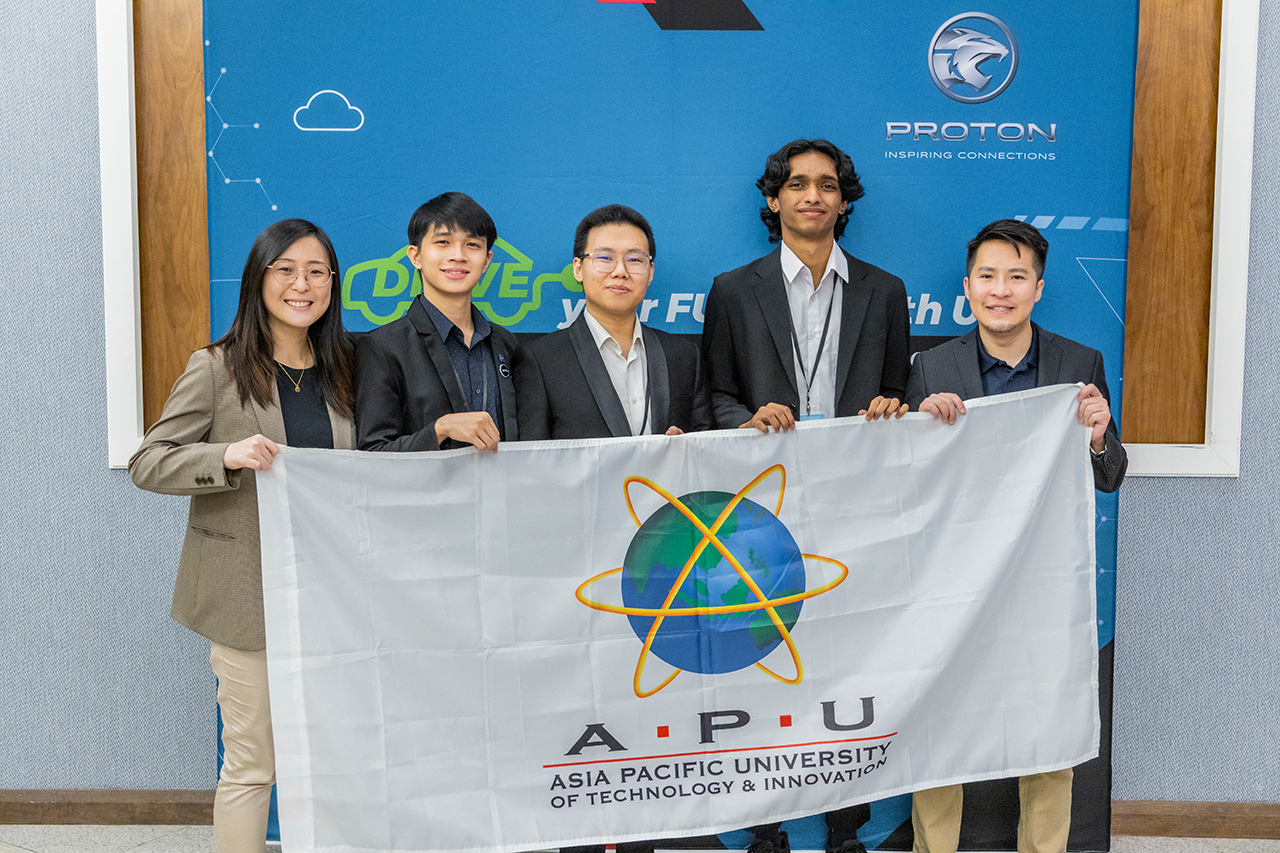
“Ricky brought the ideas, I handled the numbers, and Kish led the technical execution. Coming from different degree backgrounds, we complemented one another seamlessly,” Topaz shared.
Kishanlal Panicker, a Computer Science (specialism in Cyber Security) student, similarly shared that thorough research, clear communication, and strong synergy were decisive factors behind their success.
Leveraging artificial intelligence (AI) tools and coding platforms, he brought the team’s vision to life through a working prototype that gave the judges a tangible look at their solution.
“Because we came from different disciplines, each of us owned a clear pillar of the project. I took charge of the technical build, Ricky drove the business strategy, and Topaz managed the financials.
“We overcame our initial gap in understanding EV operational costs and functions through intensive research and reading,” Kishanlal said, adding, “It felt great to see our sleepless nights and hard work pay off in the end.”
By turning real-world automotive challenges into a launchpad for student talent, APU’s success at PBCSC 2026 underscored its commitment to experiential education and sustainable development — directly advancing Quality Education (SDG 4) and Decent Work and Economic Growth (SDG 8) while preparing the next generation of business leaders to thrive on the global stage.
News & Happening
Download e-Brochures
Intake Calendar
Want to know more ?
Let’s Connect