Image
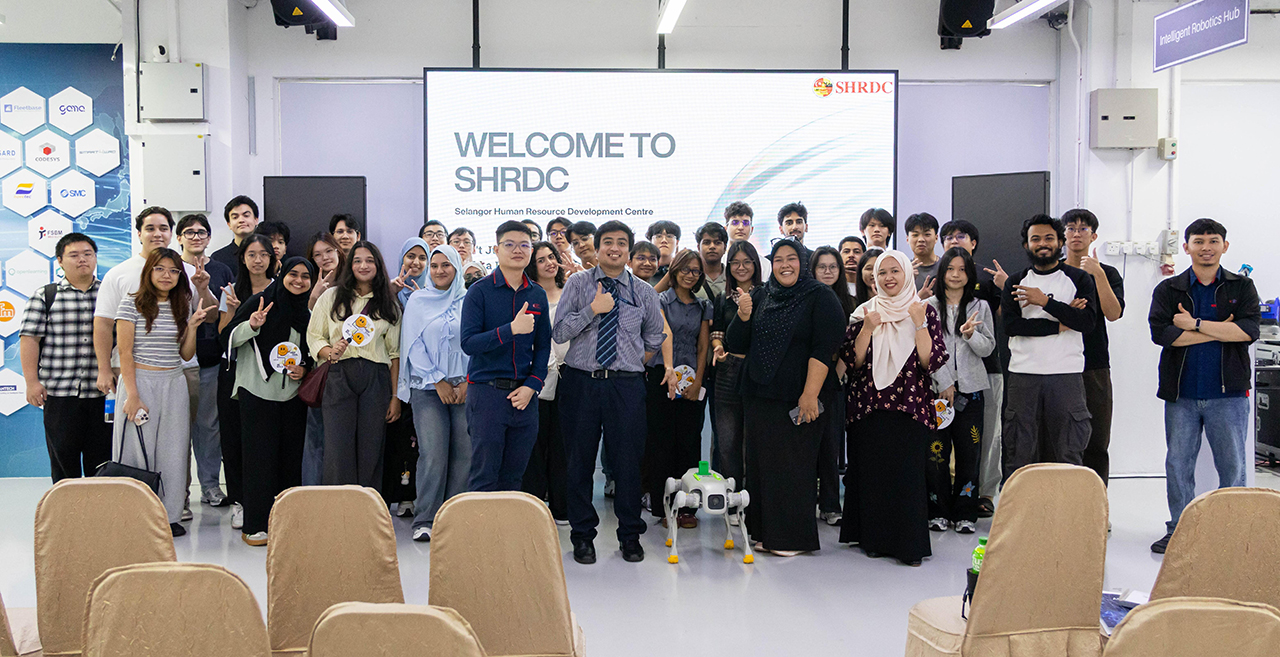
Recently, students from the School of Computing (SoC) and School of Engineering (SoE) at Asia Pacific University of Technology & Innovation (APU) took part in an industrial visit to the Selangor Human Resource Development Centre’s (SHRDC) SINERGI Lab.
Led by Ms Aida Raihanah Mohd Marzuki (Lecturer, SoC at APU) and Mr Muhammad Huzaifah Ismail (Lecturer, SoC at APU), the visit gave students the opportunity to explore how artificial intelligence (AI), robotics, automation, 3D printing, and 5G connectivity are applied within an Industry 4.0 environment.
Exploring SINERGI and Smart manufacturing
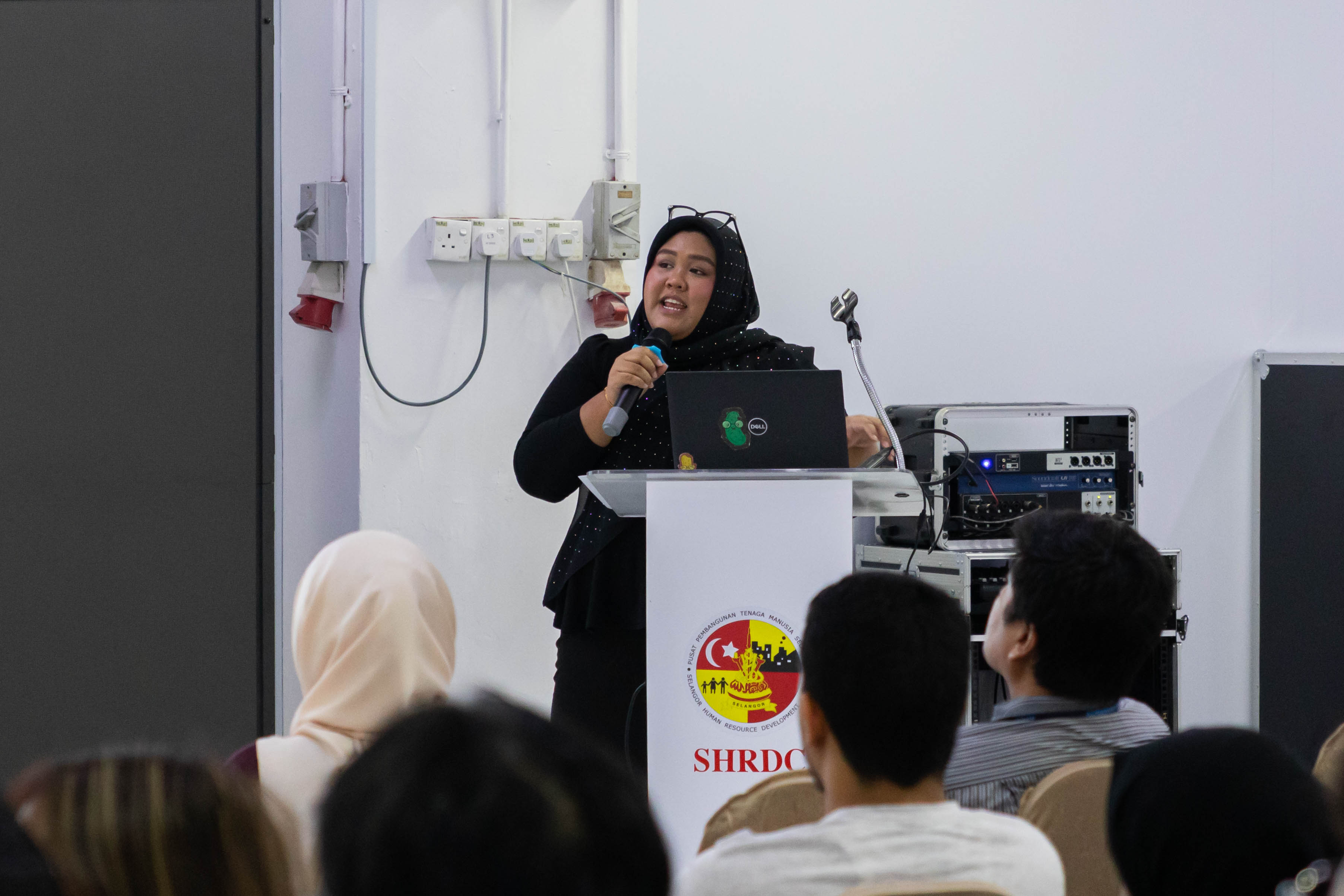
The visit began at the lab’s Intelligent Robotics Hub, where Ms Didie Sharina, Training Planner at Malaysian Smart Factory 4.0 (MSF 4.0), welcomed the students and introduced them to SHRDC and its work in preparing talent for Industry 4.0.
SHRDC’s MSF 4.0 provides competency-based training in areas including industrial and data automation, data analytics, AI, robotics, and smart manufacturing, with hands-on learning forming part of its approach to developing an Industry 4.0-ready workforce.
Following the introduction, Dr Reuben Lim, Technical Specialist at MSF 4.0, engaged the students in a quiz, with the top five scorers receiving keychains produced using the lab’s 3D printing machine.
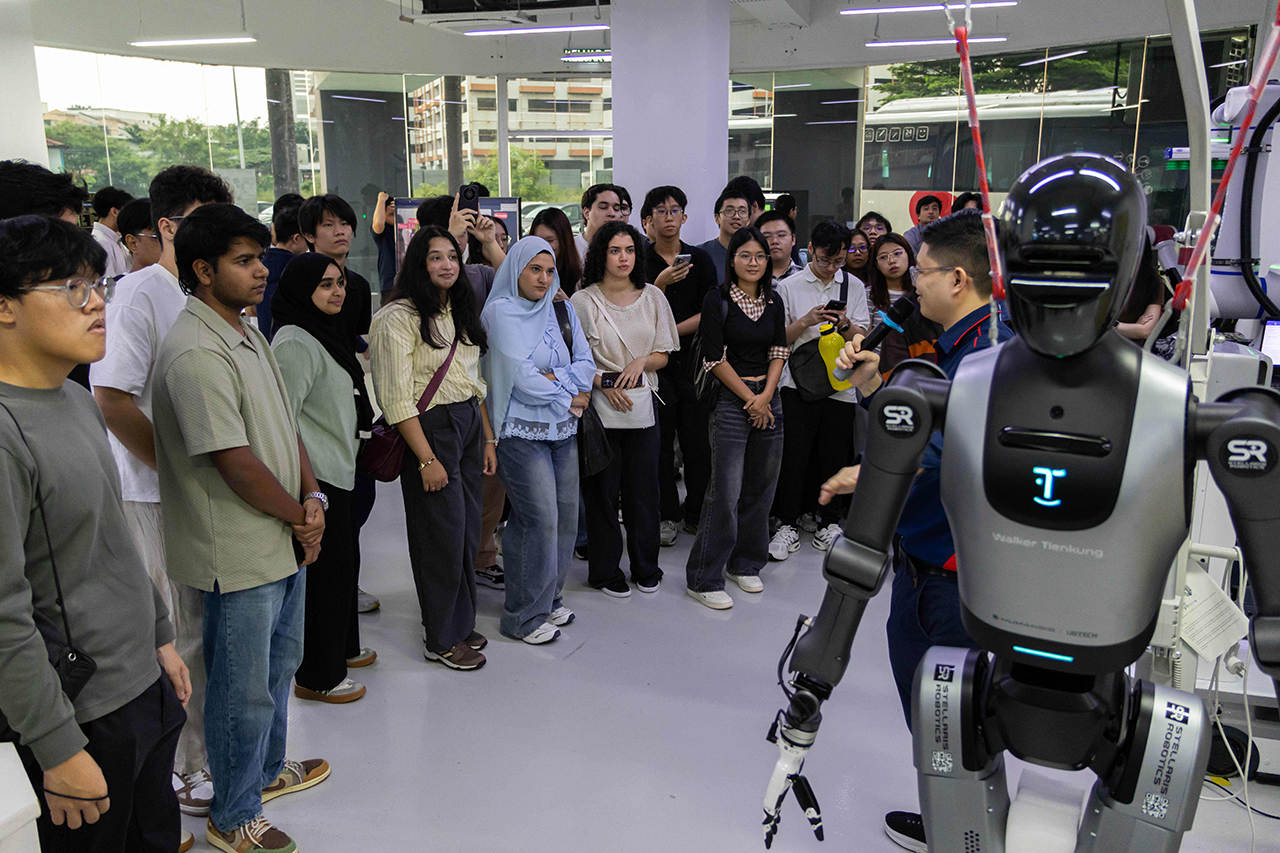
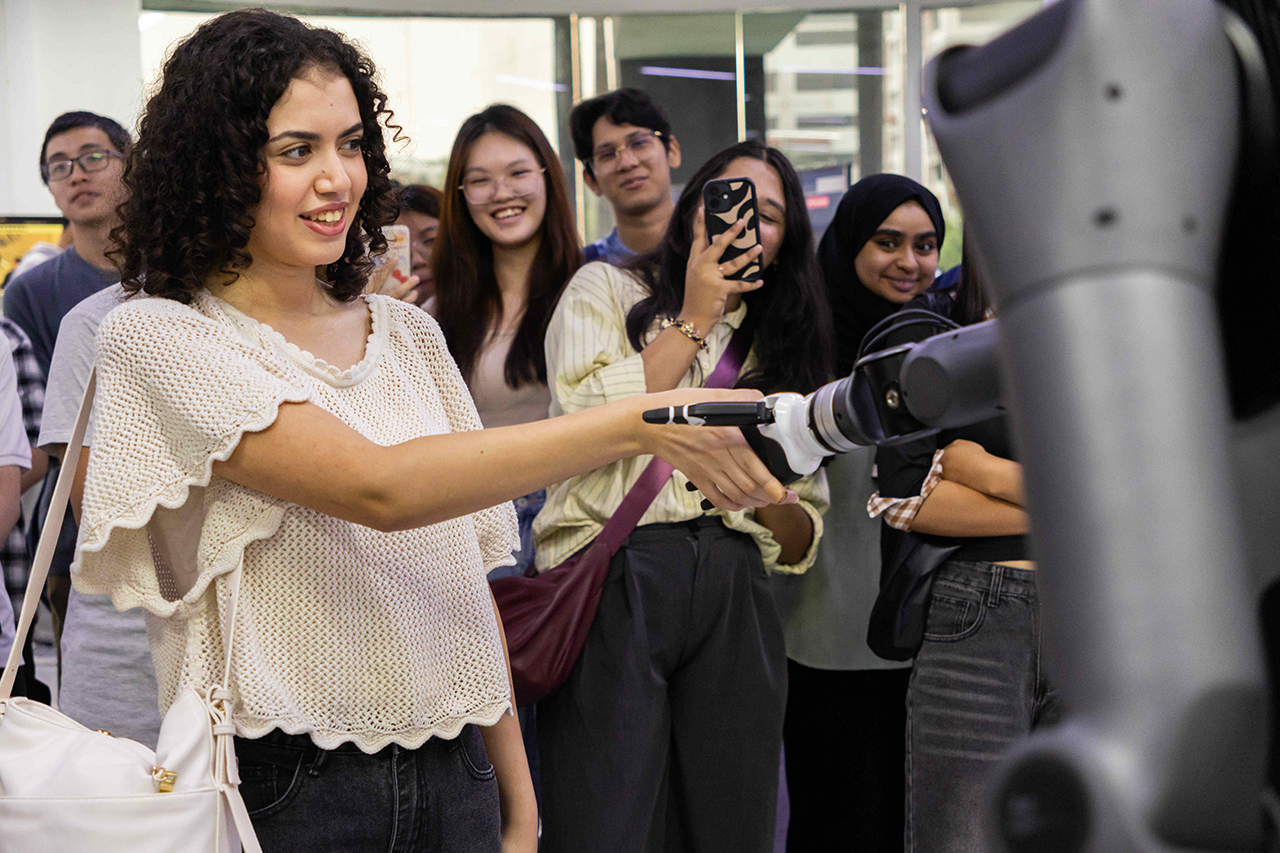
The students then began their tour at the Intelligent Robotics Hub, where they observed a humanoid robot demonstration and explored a four-legged robotic platform.
The demonstrations gave students an opportunity to observe the design, movement, and different forms of robotic systems up close, while seeing how such technologies can be developed for different applications.
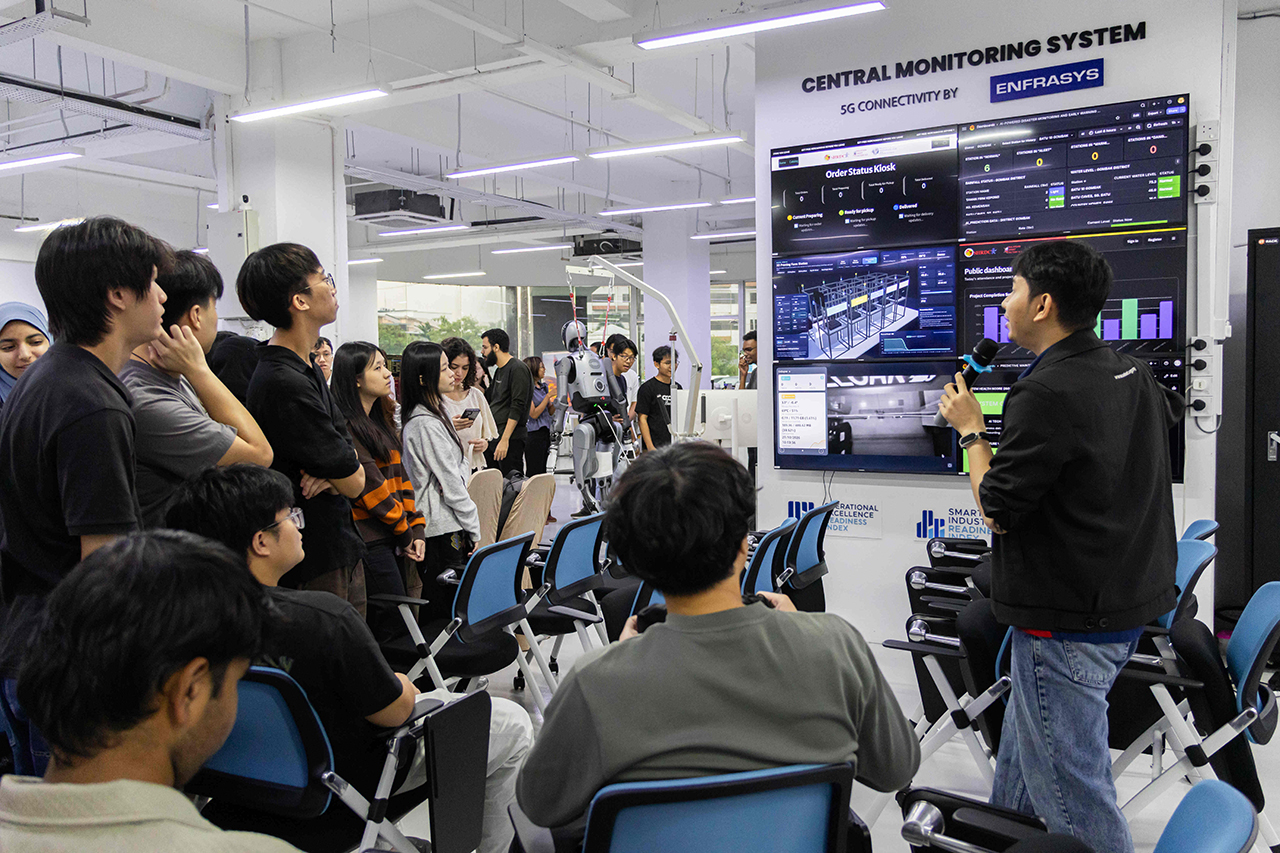
The tour then moved to the Central Monitoring System, where students explored live dashboards that brought together data from across the lab through a 5G network powered by Enfrasys.
The dashboards displayed information from different applications; including an order status kiosk, a digital twin of the 3D printing farm, predictive maintenance indicators, and an AI-powered disaster monitoring and early warning dashboard tracking rainfall and water levels in the Gombak district.
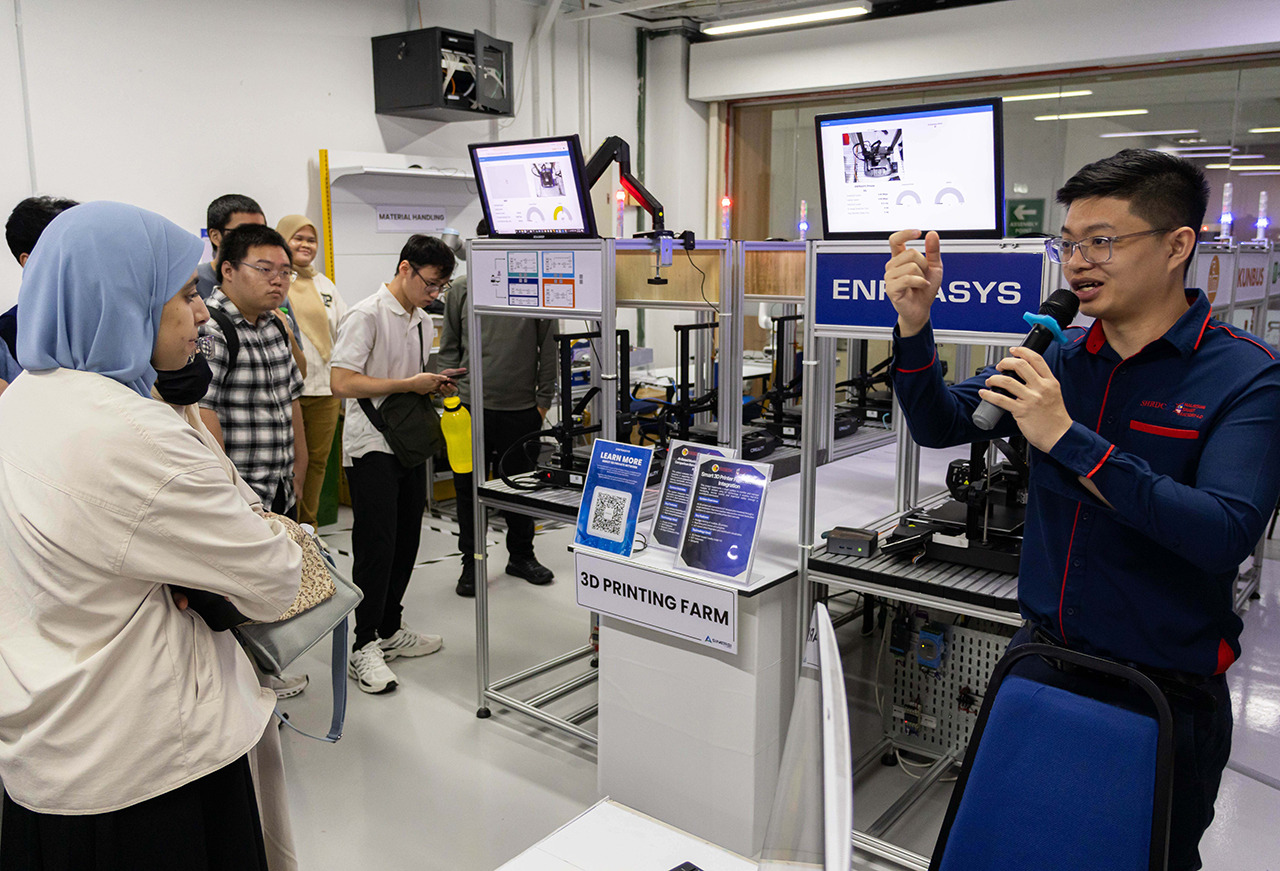
Following it, students visited the 3D printing farm, where Dr Reuben explained how multiple printers can be connected, monitored, and managed as a single system, with live machine status, camera feeds, and job progress displayed on monitoring screens.
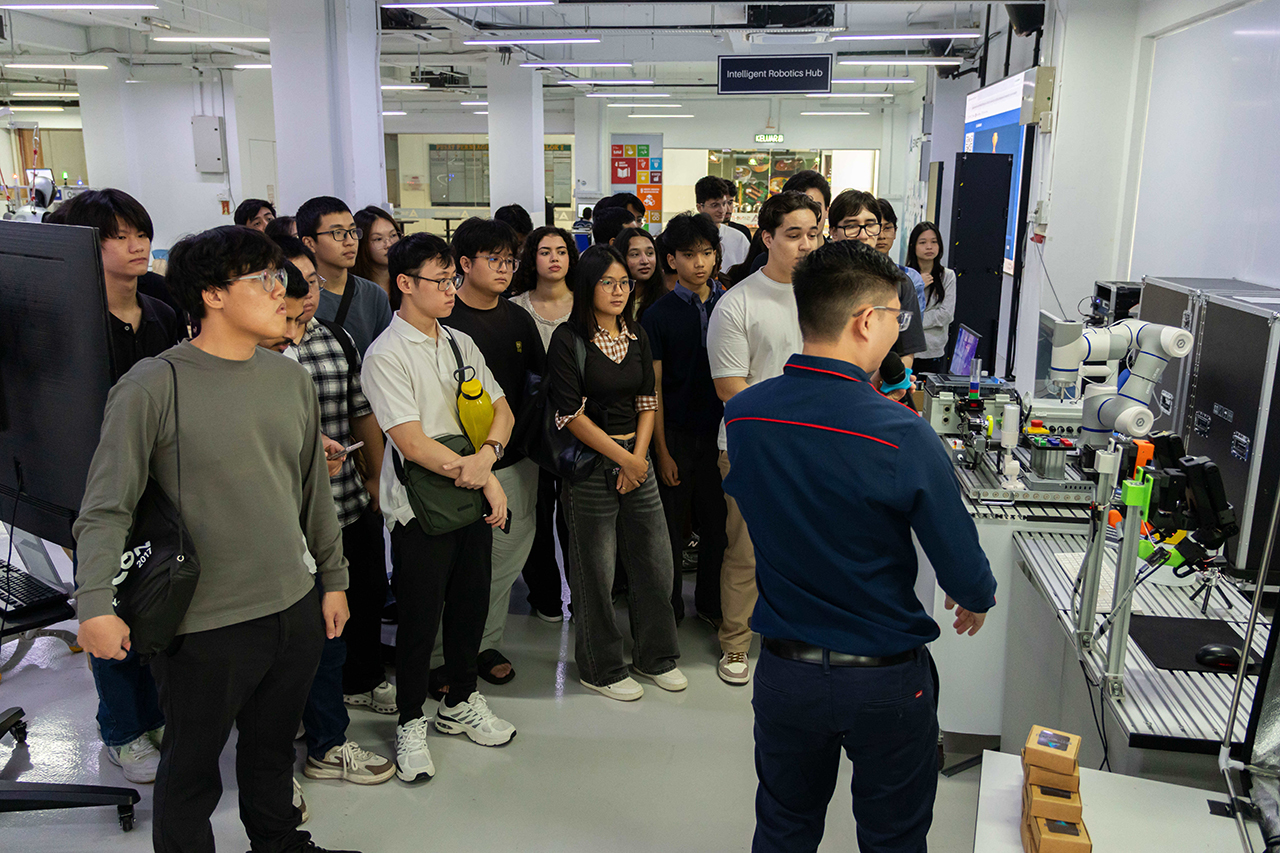
The demonstration also introduced students to the role of private 5G connectivity in supporting communication between machines and enabling real-time data exchange.
The tour continued with the automation stations, where students observed a range of applications involving robotics, connected systems, and automated processes; including a tactile assembly station where a collaborative robotic arm handled components alongside human workers to demonstrate how people and robots can work together within an industrial setting.
The students were also introduced to the digital twin sorting system, a 5G-enabled cobot quality control inspection station, and a go-kart defect inspection system; giving them further examples of how automation, robotics, and connected systems can support different industrial processes.
The automation demonstrations concluded with a hand-guided leader arm, where students guided one robotic arm, while a follower arm mirrored its movements; offering a closer look at how robotic systems can respond to human input.
Student Perspectives
- Maximilian Richie Untarman, Bachelor of Science (Honours) in Computer Science (Cyber Security): “The visit offered me valuable insights into AI, automation, and robotic innovations, while the demonstrations and real-world applications showcased during the visit helped me better understand how these technologies are being developed and applied in different settings.”
- Agabayev Kemal, Bachelor of Science (Honours) in Computer Science with a specialism in Data Analytics: “The visit gave me a glimpse into industry practice, while the welcoming environment showed me how exposure to experienced professionals can help students better understand the opportunities and expectations of the working world.”
- Wong Xin Yu, Bachelor of Science (Hons) in Software Engineering: “Exploring SINERGI Lab was a fun and engaging experience that gave me new insights beyond the scope of my university studies; allowing me to see how the knowledge i gain in the classroom connects with real-world applications.”
- Alavi Mujtaba, Bachelor of Computer Engineering with Honours: “Seeing real-world robotics in action was an informative and engaging experience that gave me a better understanding of how robotics and automation are developing; offering a glimpse into how these innovations are shaping the future.”
Reflections on the Industrial Visit
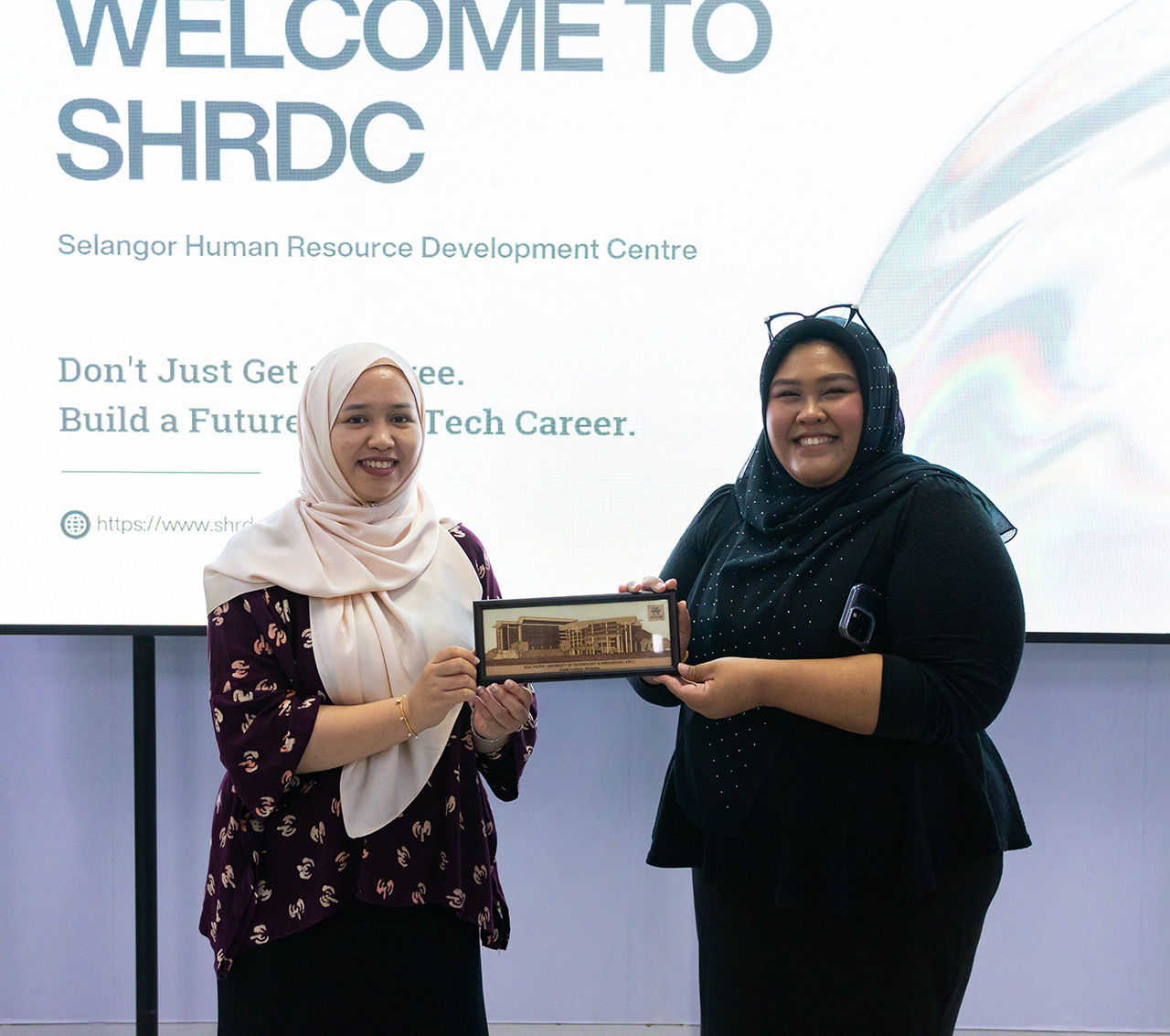
Ms Aida highlighted that the demonstrations and guided explanations throughout the visit allowed students to connect concepts covered in their programmes with practical applications, while broadening their understanding of how different disciplines contribute to smart manufacturing.
“The experience also reflected the importance of interdisciplinary knowledge in developing connected industrial systems, where areas such as computing, engineering, data, automation, and cybersecurity work alongside one another.”
Building on this, Assoc Prof Ts Dr Tan Chin Ike (Head, SoC at APU) emphasised the importance of exposing students to smart manufacturing environments, where they can see how different technologies work together in practice.
“Smart factories are no longer a future concept.
“When students see AI, robotics, and connected systems working together in an industrial environment, they understand why the fundamentals they learn in class matter, and why security has to be part of every system from day one,” he said.
News & Happening
Download e-Brochures
Intake Calendar
Want to know more ?
Let’s Connect