The Asia Pacific University of Technology & Innovation’s (APU) School of Computing (SoC) organised the AI RailQuest Challenge 2026: Ticket to Ride Europe Edition, where Master of Business Administration with a Specialism in Artificial Intelligence (MBAi) students applied computational thinking, AI concepts, and strategic problem-solving through an adapted board game, reinforcing APU’s commitment to innovative, creative and student-centred learning.
Image
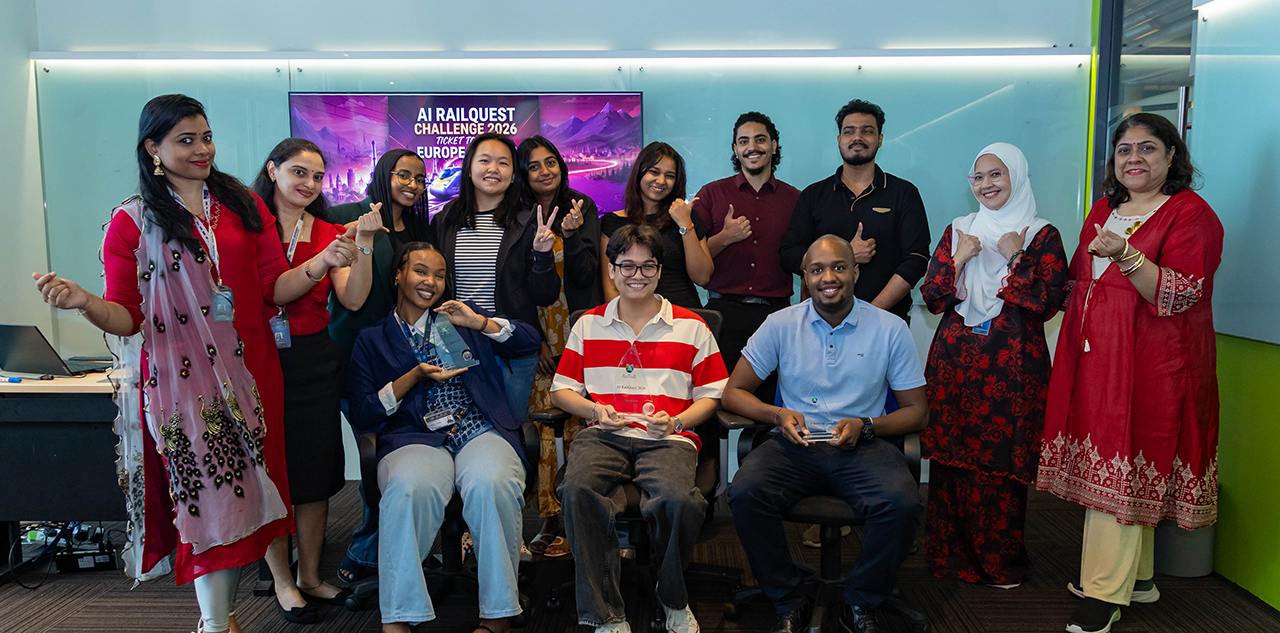
On 9 July 2026, the Asia Pacific University of Technology & Innovation’s (APU) School of Computing (SoC) successfully organised the AI RailQuest Challenge 2026: Ticket to Ride Europe Edition, bringing together students from the Master of Business Administration with a Specialism in Artificial Intelligence (MBAi) programme for an engaging and intellectually stimulating learning experience.
Designed as part of the Computational Thinking for AI module, a core second-semester subject in the MBAi programme, the two-hour competition transformed the popular Ticket to Ride: Europe board game into an innovative educational platform that enhanced students’ understanding of computational thinking and Artificial Intelligence (AI) concepts through strategic gameplay.
The internal competition welcomed students from Djibouti, France, India, Kenya, Malaysia and other countries, creating a vibrant multicultural environment that encouraged collaboration, critical thinking, and strategic problem-solving.
The educational concept behind the challenge was developed by Associate Professor Ts Dr Vinothini Kasinathan, who envisioned adapting the classic board game into a practical AI learning experience.
The successful implementation of the challenge was supported by the collaborative efforts of the SoC academic team, comprising Ms Sarimah Samsudin, Ms Thavamalini Sivasamy, and Dr Adeline Sneha John Chrisastum.
The original game mechanics were carefully redesigned to align with the learning outcomes of the MBAi programme, transforming a recreational activity into a meaningful teaching tool for computational thinking and AI.
This innovative approach demonstrated how game-based learning could effectively bridge theoretical knowledge with real-world problem-solving, making complex AI concepts more accessible and engaging for postgraduate students from diverse academic backgrounds.
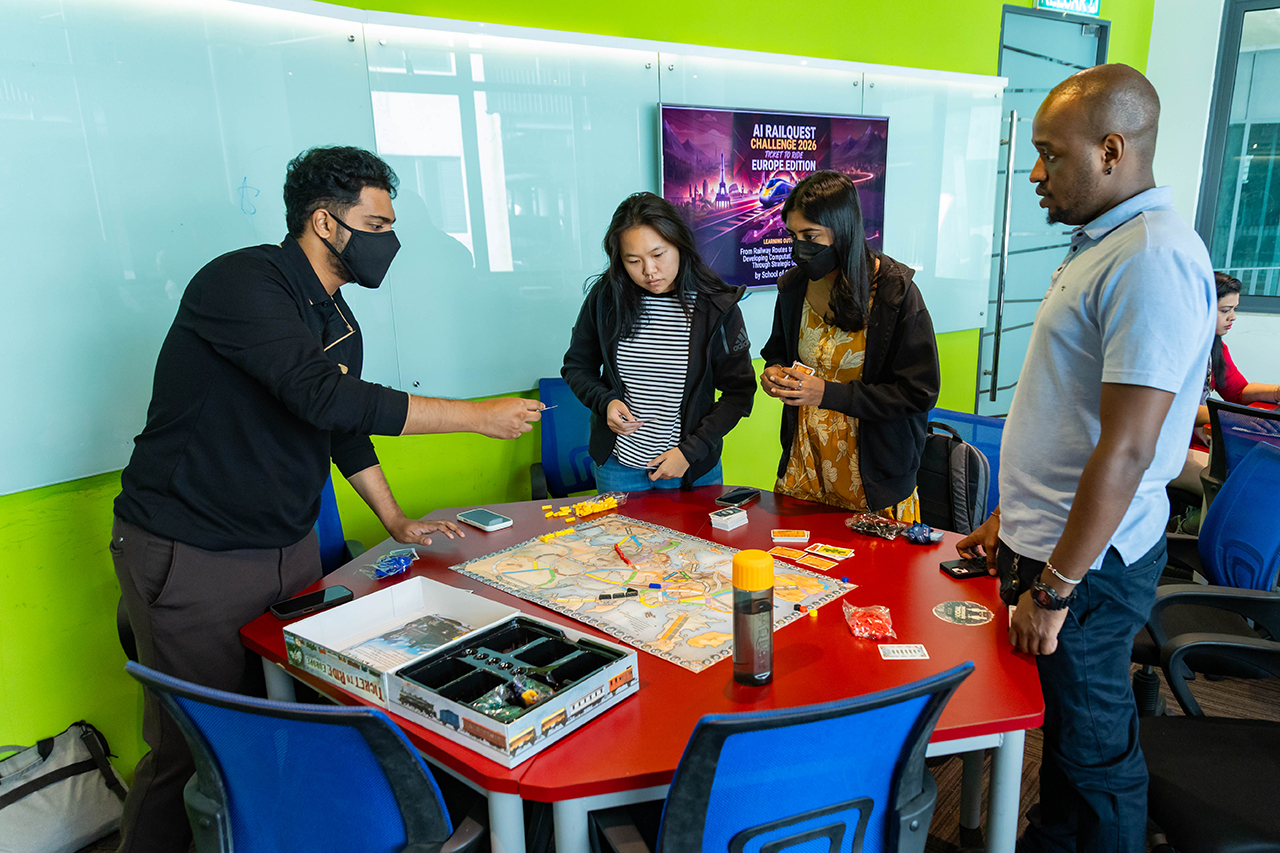
Using the customised version of Ticket to Ride: Europe, students explored the Travelling Salesman Problem (TSP), one of the most well-known optimisation challenges in AI.
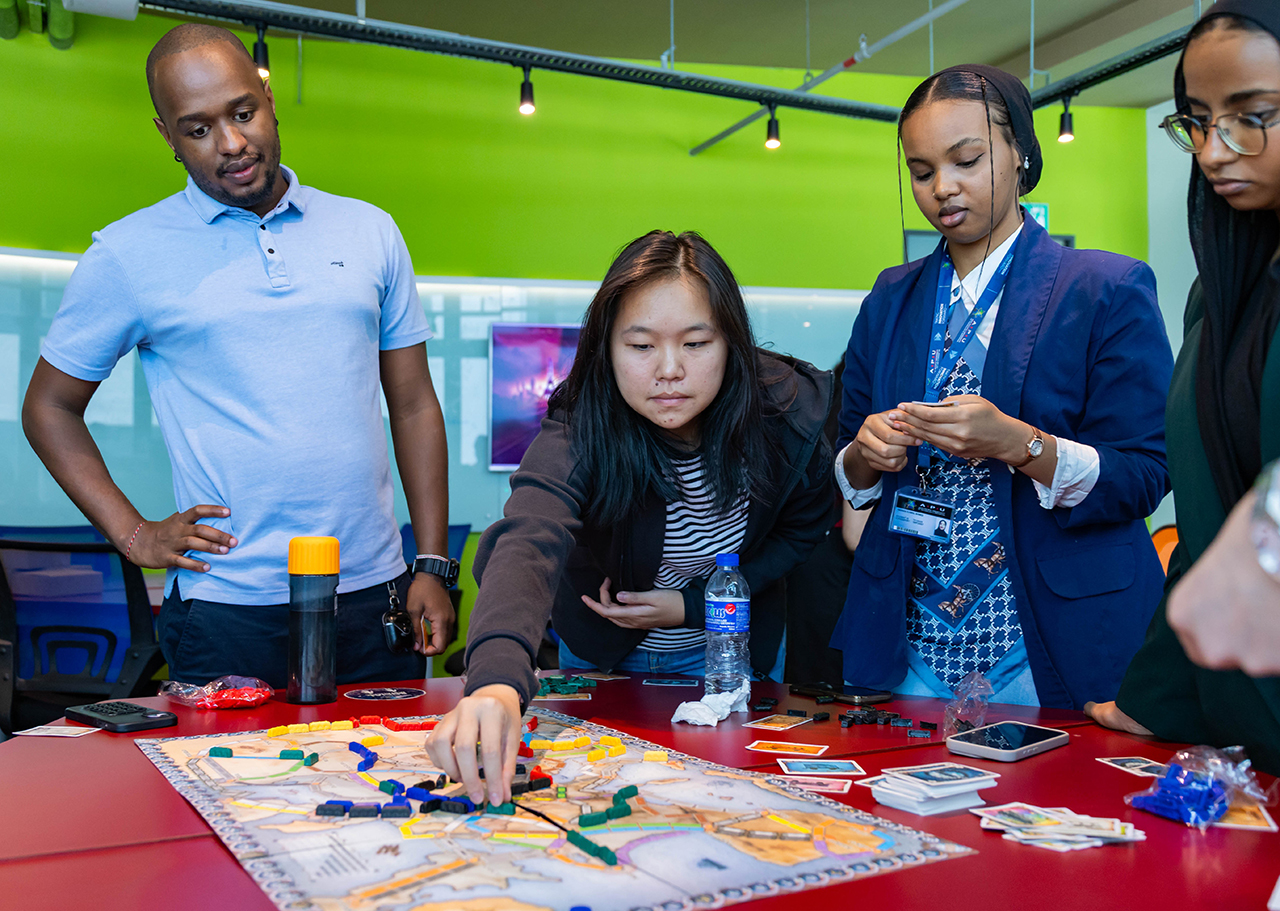
Rather than concentrating solely on the game’s original scoring system, participants analysed alternative routes, optimised limited resources, made strategic decisions, and adapted to changing scenarios — mirroring the techniques used in AI-powered route optimisation and intelligent navigation systems.
Reflecting on the event, Associate Professor Ts Dr Vinothini shared that the AI RailQuest Challenge 2026 not only strengthened students’ understanding of computational thinking and AI optimisation but also cultivated analytical reasoning, strategic decision-making, teamwork, and intercultural collaboration among postgraduate learners.
“One of the highlights of the competition was seeing everyone standing up while playing because they were so determined to win the trophies.
“During our normal classroom sessions, they would usually remain seated and help one another. I suppose the trophies brought out their competitive side,” she said.
At the end of the event, the top three performers were recognised based on their combined performance across two rounds.
Thomas Raphael Law-Pang (from France) emerged as the champion of the AI RailQuest Challenge 2026: Ticket to Ride Europe Edition, while Hansan Djibril Ahmed (Djibouti) secured first runner-up and Harun Mutugi Masebu (Kenya) claimed second runner-up.
Sharing his experience, Thomas Raphael said the game had helped him understand how AI solved real-world route-planning problems.
“Dr Vino introduced us to Ticket to Ride: Europe during class to demonstrate how Google Maps works and how AI solves route-planning problems.
“It was a fun and effective way for Business students with little technical background to understand AI concepts. Winning the class competition made the experience even more memorable,” he said.
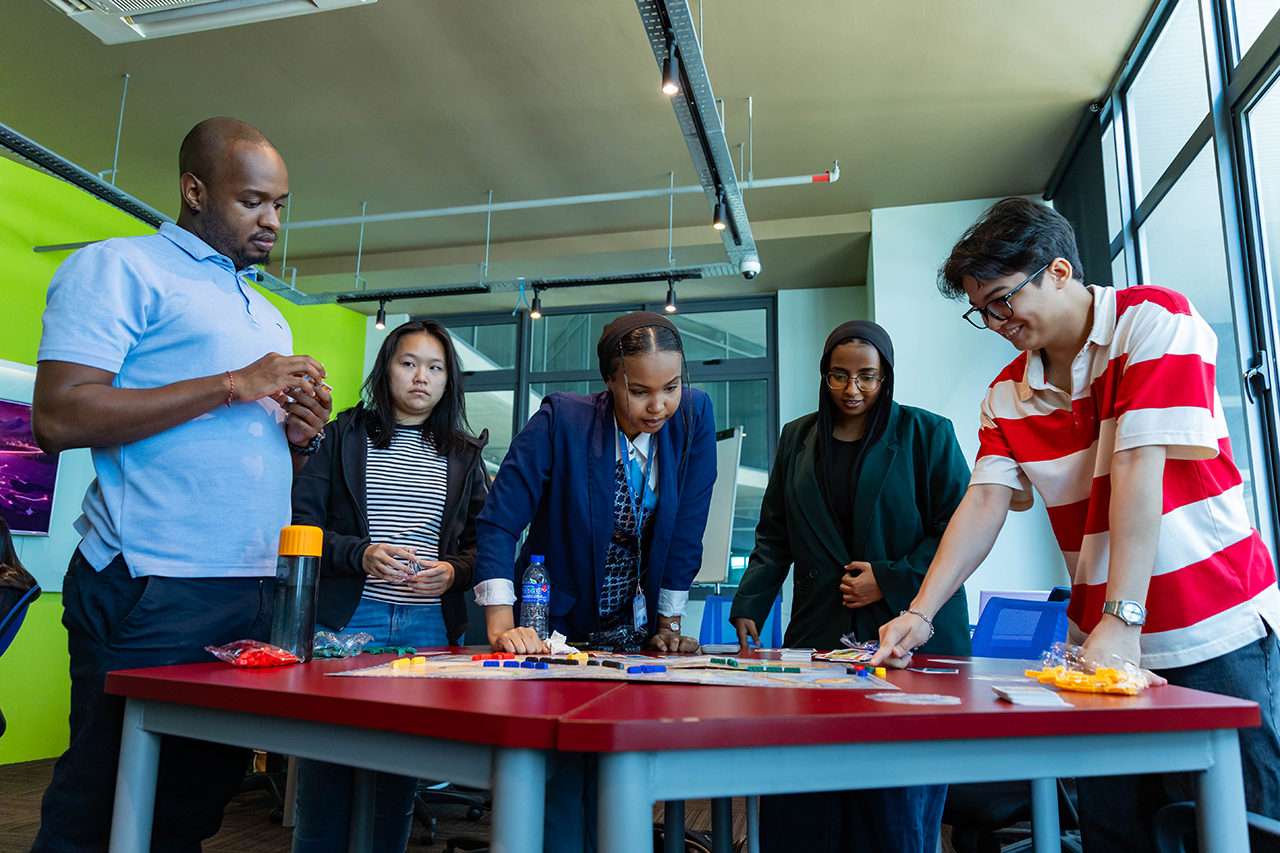
Second runner-up Harun Mutugi from Kenya described the challenge as both enjoyable and intellectually rewarding.
“I really enjoyed playing the game because it taught me how to develop strategies and identify the shortest and most efficient routes to achieve my goals.
“Although it looks simple, it presents plenty of challenges, which makes it even more enjoyable,” he said.
Lina Fahmi from Djibouti said the competition made learning AI concepts far more approachable.
“I really enjoyed playing Ticket to Ride: Europe during the AI RailQuest Challenge because it made route planning and decision-making simple, practical, and enjoyable.
“It was a great way to understand AI concepts without the lessons feeling too technical,” she said.
Meanwhile, Sum Ya Rou from Malaysia said the activity demonstrated how computational thinking could be applied in a practical setting.
“The game was both enjoyable and educational. It showed me how computational thinking can be applied through strategy, logical reasoning, and route planning,” she said.
By transforming a globally recognised board game into an interactive AI learning experience, the AI RailQuest Challenge 2026 demonstrated how creative teaching approaches could make complex technological concepts both engaging and accessible, equipping students with valuable problem-solving skills that extend beyond the classroom.
News & Happening
Download e-Brochures
Intake Calendar
Want to know more ?
Let’s Connect