Three APU Artificial Intelligence (AI) students — Isaac Lew Zhi Hao, Chai Zhe Hee, and Bryan Wan Zhing Hoi — transformed an A+ classroom assignment into an international gold medal win at the virtual iCE-CInno 2026 with PongoBot, a bilingual, AI-powered companion that makes orangutan and rainforest conservation education interactive and engaging.
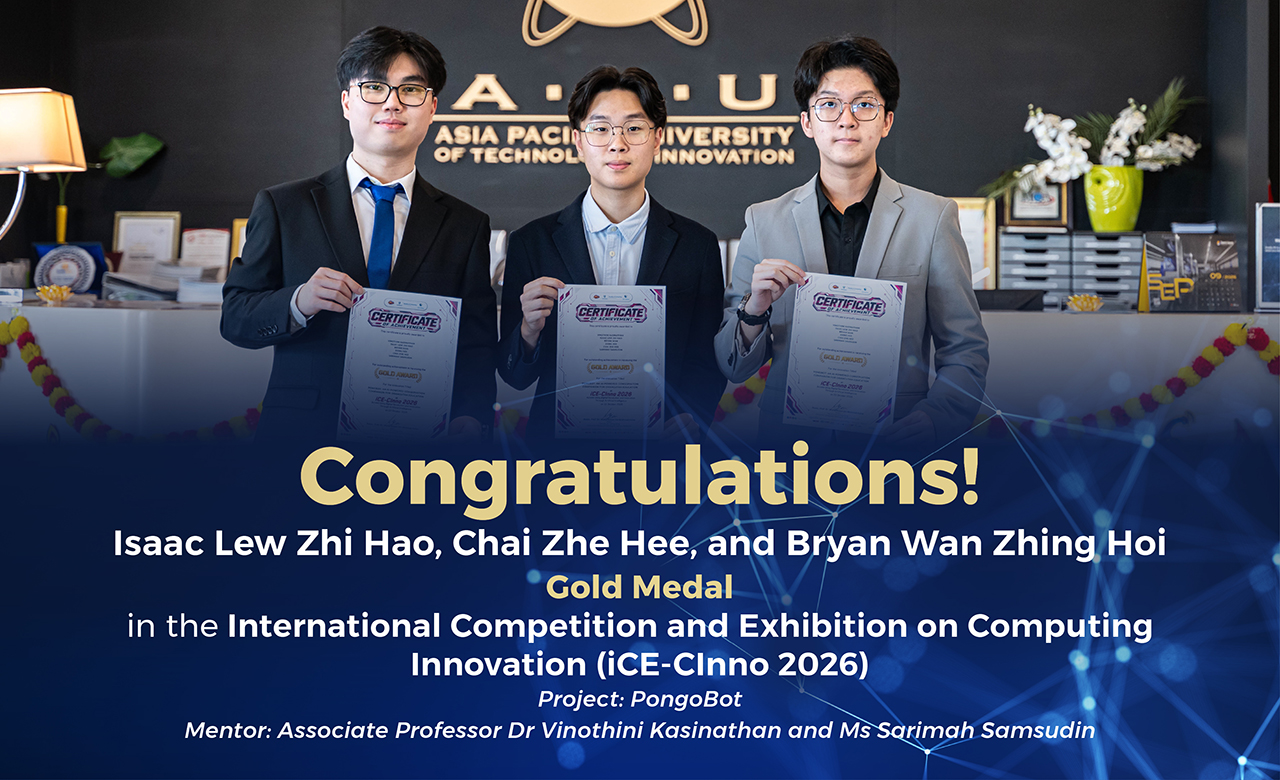
The journey of the PongoBot project began within the classroom walls during an Introduction to Artificial Intelligence (AI) module at Asia Pacific University of Technology & Innovation’s (APU) state-of-the-art campus.
Tasked with developing an AI-driven educational tool, Computer Science Artificial Intelligence (AI) students Isaac Lew Zhi Hao (team leader), Chai Zhe Hee, and Bryan Wan Zhing Hoi created an initial prototype that showcased exceptional creativity, technical finesse, and practical utility, earning them an outstanding A+ grade.
Recognising that the project had potential far beyond a term paper, Associate Professor Dr Vinothini Kasinathan from the School of Computing (SoC) urged the students not to let their work end with a final mark.
Believing that exceptional student innovation deserved a global platform, she encouraged the team to refine their conversational architecture, sharpen their technical rationale, and enter the International Competition and Exhibition on Computing Innovation (iCE-CInno 2026).
Organised by the Faculty of Computing at Universiti Malaysia Pahang Al-Sultan Abdullah (UMPSA), iCE-CInno is a premier computing competition bringing together primary, secondary, tertiary, and open-category inventors.
Alongside co-mentor Ms Sarimah Samsudin, SoC Senior Lecturer; Dr Vino and Ms Sarimah guided the team through a rigorous preparation phase.
Together, they coached Isaac, Zhe Hee, and Bryan in articulating the societal impact of their technology, polishing their presentation delivery, and building the confidence necessary to compete at an international level.
This dedicated mentorship successfully elevated a classroom assignment into a gold-medal-winning innovation.
PongoBot was engineered to tackle low awareness surrounding critically endangered orangutans in Malaysia, especially among youth.
Traditional awareness mediums — such as static posters and lectures — often struggle to maintain engagement, leaving a distinct shortage of interactive local content online.
PongoBot transforms learning into an intuitive conversation rather than a lecture, guiding users through orangutan diets, habitats, threats, and seed-dispersal roles in rainforest regeneration.
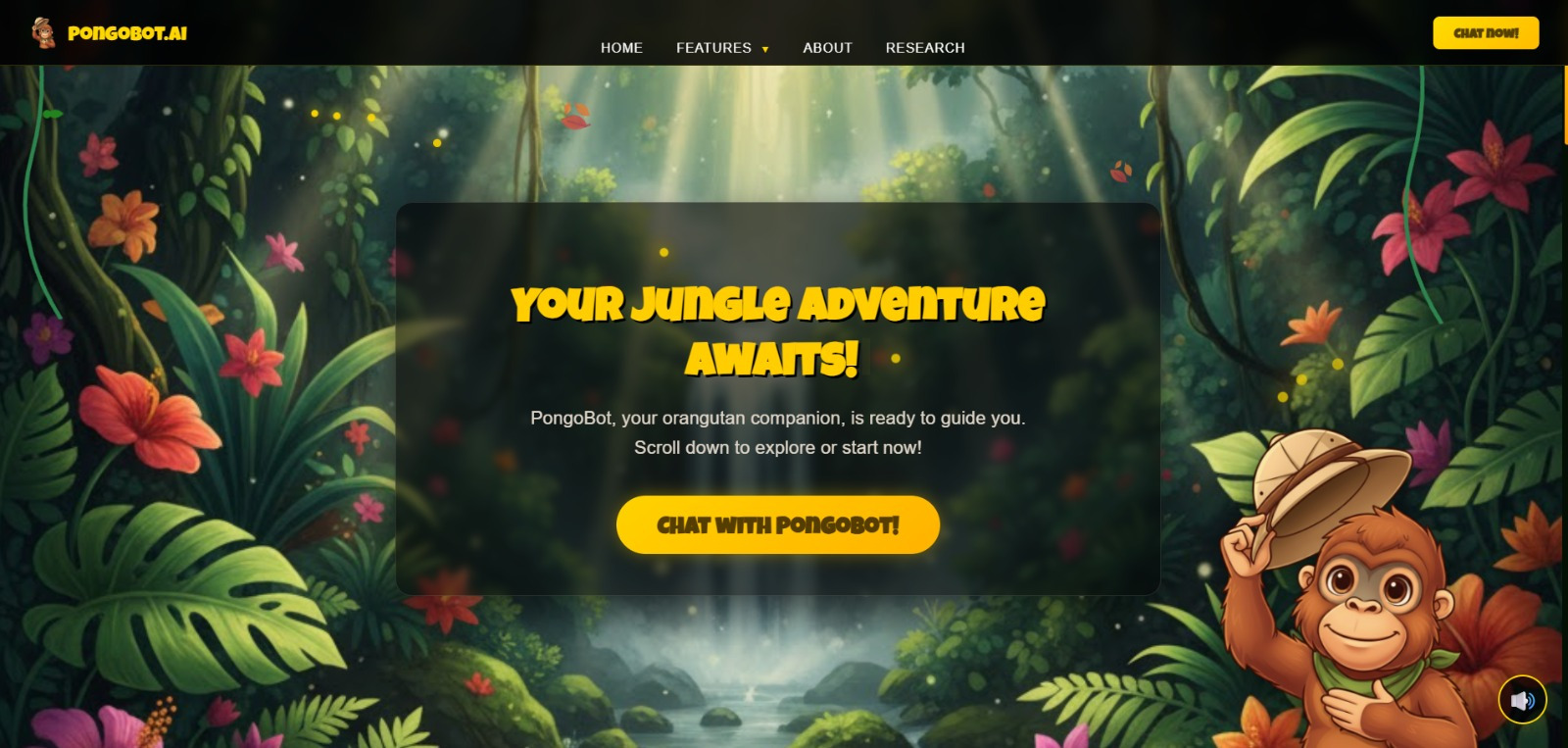
Operating seamlessly in both English and Bahasa Malaysia to ensure broad accessibility, the AI companion features structured chapters in a dedicated Pongo Classroom.
By driving interactive environmental literacy, PongoBot directly advances three United Nations Sustainable Development Goals (UN SGDs): Quality Education (SDG 4), Climate Action (SDG 13), and Life on Land (SDG 15).
Content was rigorously curated from credible authorities including WWF Malaysia, the Sepilok Orangutan Rehabilitation Centre, and the IUCN Red List.
The development process was driven by active teamwork and research specialisation where Bryan investigated the shortage of interactive educational platforms, Zhe Hee examined misrepresentations and public disconnects regarding wildlife conservation, and Isaac focused on educational gaps linked to the SDGs.
“Those debates pushed all of us to bring our best and made PongoBot better,” explained Isaac.
“They shaped key features like bilingual support, the Pongo Classroom, and the minigame. Because we respected each other’s strengths and weren’t afraid to disagree, we ended up with a stronger solution than any of us would have made alone.”
Creating a seamless user experience presented significant technical challenges, particularly in natural language processing.
Early test users often received incorrect replies when phrasing questions unexpectedly.
To resolve this, the team engineered keyword groups with synonyms and combined conditions — ensuring the bot cross-checks intent and subject together (such as ‘food/diet’ plus ‘orangutan/Pongo’).
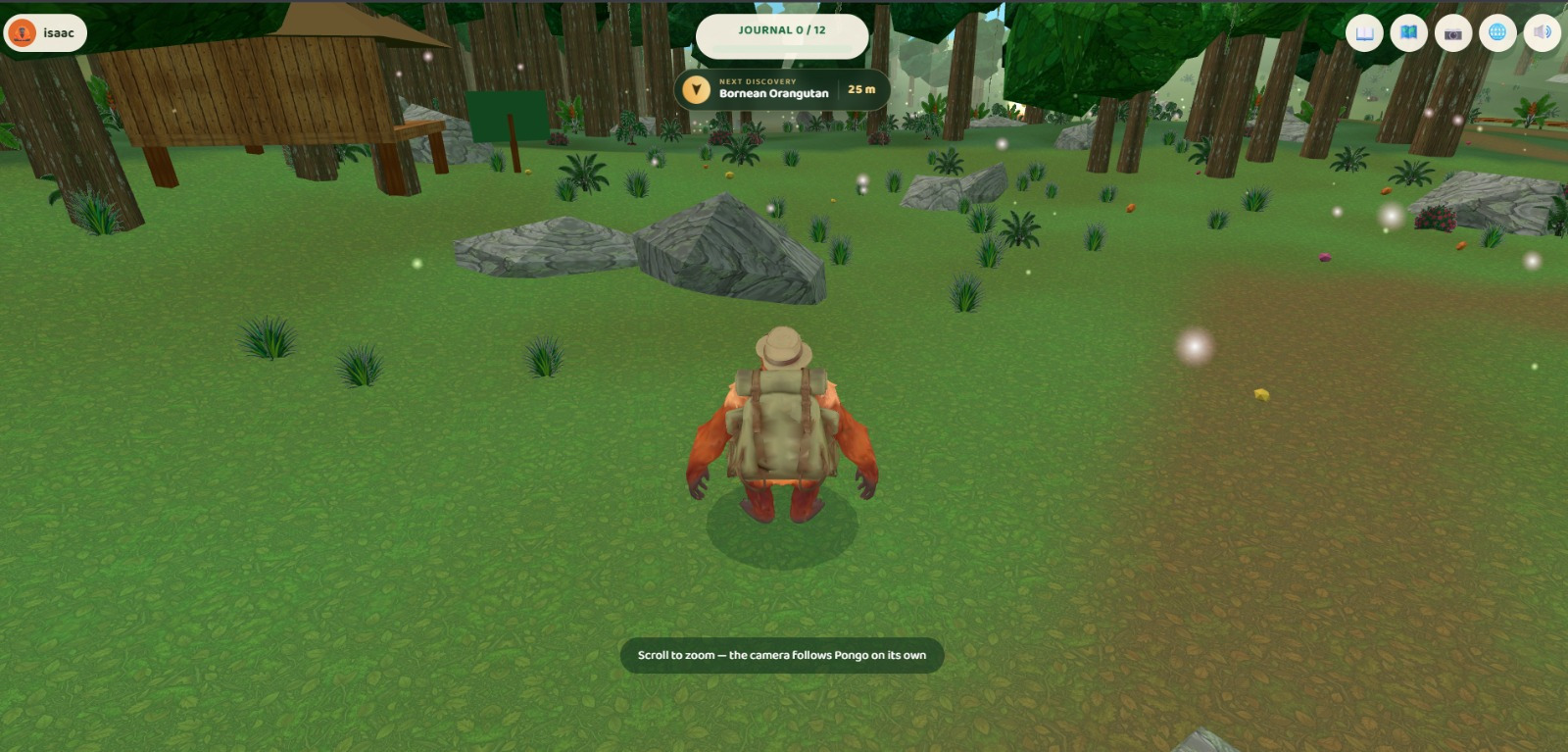
Balancing playful personality with factual accuracy required strict verification against scientific databases.
“It feels incredible and humbling. Seeing our hard work recognised with a gold award at iCE-CInno 2026 means a lot to all of us. I am proud to represent APU and grateful to my teammates, Bryan and Zhe Hee, and to our lecturers for their support,” added Isaac.
Zhe Hee, who spearheaded the conversational framework, shared this competition gave them the opportunity to challenge themselves well beyond programming, from shaping the vision to solving complex technical hurdles as well as to educate, inspire, and drive real change.
Bryan, who structured the user-centred design, added winning gold reinforced their commitment to building human-centred software that translates intricate rainforest dynamics into simple, engaging concepts that contribute meaningfully to education.
From a classroom assignment to the top of an international podium, PongoBot proves that when student creativity is paired with dedicated academic mentorship, brilliant ideas not only earn top grades, but also make a lasting impact.
News & Happening
Download e-Brochures
Intake Calendar
Want to know more ?
Let’s Connect